





Ecological Neuro-Sensory Science | Aromatherapy & Neurocosmetics
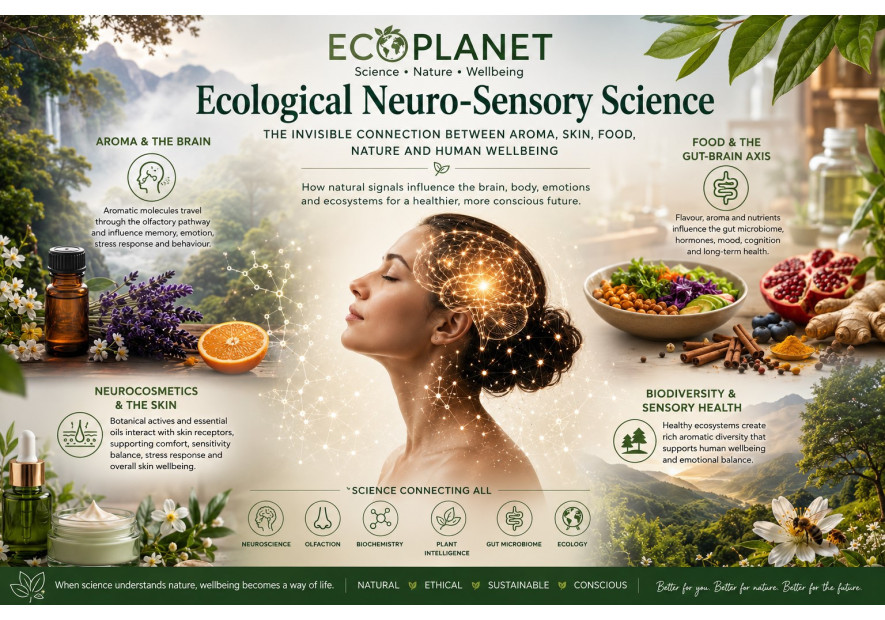
A scientific and futuristic exploration of how aroma, skin, food, biodiversity, neurocosmetics, aromatherapy and sensory wellness connect with human wellbeing and sustainable living.
Ecological Neuro-Sensory Science: Aromatherapy, Neurocosmetics, Food, Biodiversity & Human Wellbeing
By Bimal Sitanath Das
Founder & Scientist, EcoPlanet
Research areas: Aromatherapy, Sensory Wellness, Olfaction Science, Sustainability and Ecological Systems
Introduction
Human wellbeing is entering a new scientific era. Wellness can no longer be understood only through isolated categories such as skincare, food, fragrance, healthcare, agriculture or lifestyle. Modern science is increasingly revealing that aroma, food, skin, emotions, biodiversity, neuroscience and sustainability are deeply interconnected.
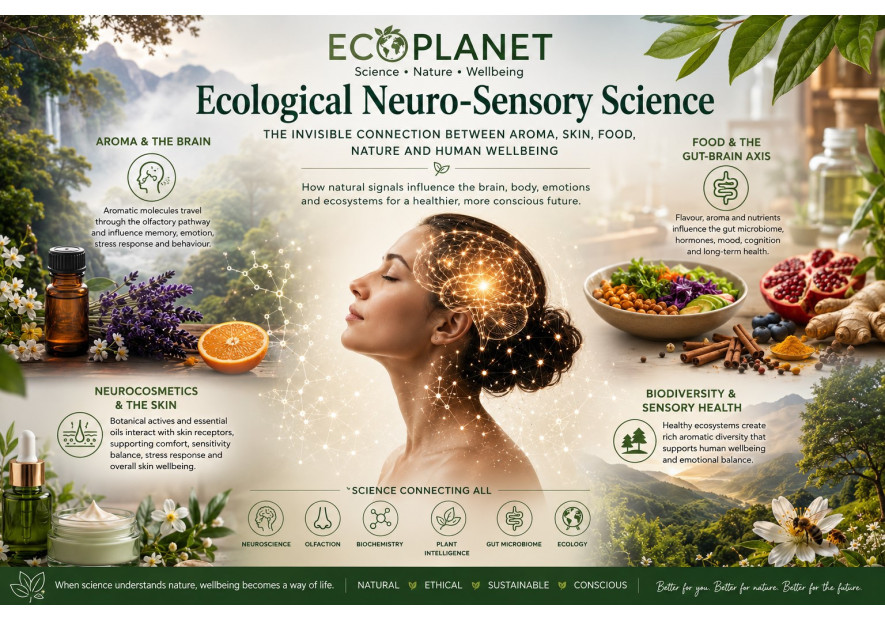
At EcoPlanetStore, we describe this emerging interdisciplinary understanding as Ecological Neuro-Sensory Science.
It explores how natural sensory signals influence the brain, skin, stress response, emotional wellbeing, food perception, behaviour and overall physiological balance.
This futuristic but realistic framework connects:
- aromatherapy
- neurocosmetics
- olfaction science
- sensory wellness
- neurogastronomy
- gut-brain axis
- biodiversity
- botanical wellness
- sustainable wellness
- ecological wellbeing
Nature Communicates Through Aroma Chemistry
Natural ecosystems continuously communicate through invisible chemical signals. Plants, flowers, forests, herbs, fruits, microbes and soils release thousands of volatile organic compounds, also known as plant volatiles or VOCs.
These aromatic molecules help plants attract pollinators, defend against pests, signal stress and interact with surrounding ecosystems.
Humans evolved within these aroma-rich natural environments. As a result, the human nervous system remains highly responsive to natural aroma chemistry.
The smell of wet soil after rain, flowering plants, forest air, medicinal herbs, Indian spices, ripe fruits or traditional kitchens can instantly influence memory, emotion, appetite and perception.
This is not only nostalgia. It is neurobiology interacting with ecological chemistry.
Aromatherapy and the Brain
Aromatherapy is one of the most practical examples of how aroma can influence human wellbeing.
When aromatic molecules are inhaled, they interact with the olfactory system. The olfactory system has a close relationship with brain regions involved in memory, emotion, stress response and behaviour.
This is why certain essential oils and natural aromas may support relaxation, alertness, emotional comfort, sensory pleasure and wellness rituals.
The future of aromatherapy may move beyond fragrance alone toward neuro-sensory aromatherapy — formulations designed with deeper understanding of olfaction science, emotional wellbeing, sensory memory and botanical chemistry.
However, essential oils are highly concentrated botanical extracts. They must be used carefully, safely and scientifically in cosmetics, spa products and wellness formulations.
Neurocosmetics and the Skin-Brain Connection
The skin is not merely a covering of the body. Modern dermatology increasingly recognizes the skin as a dynamic neuro-immuno-endocrine organ.
The skin contains sensory receptors, nerve endings, immune pathways, microbiome interactions and stress-responsive biological mechanisms.
This has led to the emergence of neurocosmetics.
Neurocosmetics are skincare and cosmetic formulations designed to support sensory comfort and skin wellbeing through the skin-brain connection.
Botanical extracts, essential oils, natural emollients and carefully selected aromatic compounds may contribute to:
- skin comfort
- sensory relaxation
- calming rituals
- cooling or warming sensations
- perceived stress relief
- emotional wellbeing experience
This is where aromatherapy cosmetics and neurocosmetics begin to overlap.
A well-designed aromatherapy cosmetic does not only moisturize or fragrance the skin. It may also create a complete sensory wellness experience through aroma, touch, texture, temperature and emotional association.
Food, Aroma and the Gut-Brain Axis
Food is not only nutrition. Food is one of the most powerful neuro-sensory experiences in human life.
Flavour is created through the interaction of aroma, taste, texture, temperature, colour, sound, memory and emotional expectation.
The scientific field of neurogastronomy studies how the brain interprets flavour and food experience.
At the same time, research on the gut-brain axis shows that food, gut microbiota and nutrition may influence mood, cognition, stress, inflammation, sleep and emotional resilience.
Aromatic foods, herbs, spices, fermented foods, fruits and plant-based diets may therefore influence wellbeing far beyond calorie intake alone.
This creates future opportunities for:
- sensory nutrition
- functional wellness foods
- mood-supportive food design
- aromatic botanicals
- gut-brain wellness products
- emotionally nourishing food systems
Biodiversity and Sensory Wellness
One of the most overlooked dimensions of human wellbeing is sensory biodiversity.
Forests, farms, flowers, medicinal plants, soil systems and microbial ecosystems create rich aromatic landscapes. These natural aroma environments may support emotional calmness, cognitive restoration, sensory balance and psychological wellbeing.
Modern life often reduces this sensory richness. Urban pollution, synthetic chemical overload, monoculture agriculture, excessive indoor living and biodiversity loss may disconnect humans from natural sensory environments.
This raises important future questions:
Can biodiversity loss affect emotional wellbeing through sensory pathways?
Can regenerative agriculture restore healthier aroma landscapes?
Can future wellness spaces be designed using principles of sensory ecology?
These questions are highly relevant for sustainable wellness, hospitality, spa design, food systems, regenerative farming and future urban living.
Sensory Sustainability: A New Wellness Frontier
Sustainability is often discussed only in terms of carbon, energy, water or waste.
But future sustainability may also include sensory sustainability.
Sensory sustainability means protecting and restoring natural sensory environments that support human and planetary wellbeing.
This includes:
- clean air chemistry
- natural aroma landscapes
- biodiversity-driven sensory richness
- authentic botanical ingredients
- healthy food aromas
- regenerative farming systems
- low-toxicity wellness products
- ecological living environments
The future of wellness will not be only about what we apply on the body or consume as food. It will also depend on the quality of the sensory environment we live in.
Aroma Intelligence and Future Wellness Technology
Emerging technologies such as VOC analytics, electronic noses, biosensors, AI-assisted aroma interpretation and sensory mapping may transform how we understand aroma, food quality, biodiversity and ecological health.
Future aroma intelligence systems may help detect:
- crop stress
- food freshness
- pest pressure
- soil health signals
- environmental changes
- wellness ambience
- product sensory quality
Aroma may become a measurable layer of ecological and wellness intelligence.
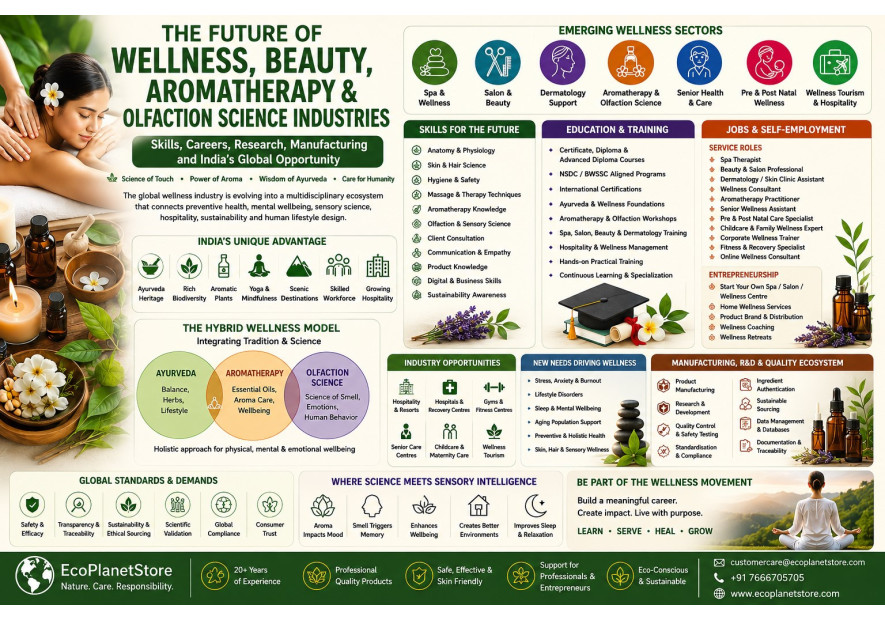
For the wellness industry, this may open new possibilities in aromatherapy, neurocosmetics, food innovation, spa environments, sensory diagnostics and sustainable product development.
Leadership in the Future Wellness Industry
The next generation of wellness leadership will require more than product selling.
It will require integrated thinking across:
- science
- nature
- sensory biology
- sustainability
- ecology
- human emotion
- responsible formulation
- and planetary wellbeing
Future wellness brands must become more transparent, scientifically grounded, ecologically responsible and sensory-aware.
Consumers are increasingly seeking products and experiences that are not only effective, but also ethical, sustainable, emotionally meaningful and connected with nature.
This is where aromatherapy, neurocosmetics, food science, biodiversity and sustainability can come together to shape the next frontier of wellness.
Conclusion
Ecological Neuro-Sensory Science is an emerging way to understand the relationship between nature and human wellbeing.
Aroma, skin, food, biodiversity and sensory experience are not separate subjects. They are interconnected biological pathways through which humans interact with the natural world.
As aromatherapy, neurocosmetics, neurogastronomy, gut-brain science, sensory wellness and sustainability continue to evolve, the future of wellbeing may depend on how intelligently humanity reconnects science with nature.
The future of wellness is not only cosmetic.
It is sensory, ecological, scientific and sustainable.
Educational Note
This article is intended for educational and scientific awareness purposes only and does not constitute medical advice.
