




Regenerative Wellness and Beauty | Natural, Organic & Ayurvedic Skincare
Regenerative wellness and beauty goes beyond natural skincare. It connects skin science, Ayurveda, clean label formulation, carbon footprint, water use, packaging waste, microplastics and planet wellbeing. For EcoPlanetStore, skincare is not only beauty — it is a responsibility towards skin, soil, aroma, biodiversity and the future of sustainable living.
Regenerative Wellness and Beauty: Why Skincare Must Go Beyond “Natural”
Beauty is no longer only about glow, fairness, fragrance or luxury. Skincare is no longer only about applying a cream, scrub, oil or serum. Wellness is no longer only about personal comfort.
As a scientist, formulator and sustainability practitioner, I believe the beauty industry now needs to ask a deeper question:
Can beauty products support skin health without damaging soil, water, biodiversity and planetary wellbeing?
For many years, the beauty industry has used words such as natural skin care, organic skin care, herbal skin care, Ayurvedic skin care, dermatology skin care, clean label beauty, minimalist skincare and sustainable skincare.
Each of these ideas has value. But alone, none of them is complete.
A product can be natural but over-packaged.
A product can be organic but water-intensive.
A product can be Ayurvedic but poorly preserved.
A product can be dermatology-inspired but environmentally heavy.
A product can be clean label but still not regenerative.
This is why the next direction is regenerative wellness and beauty.
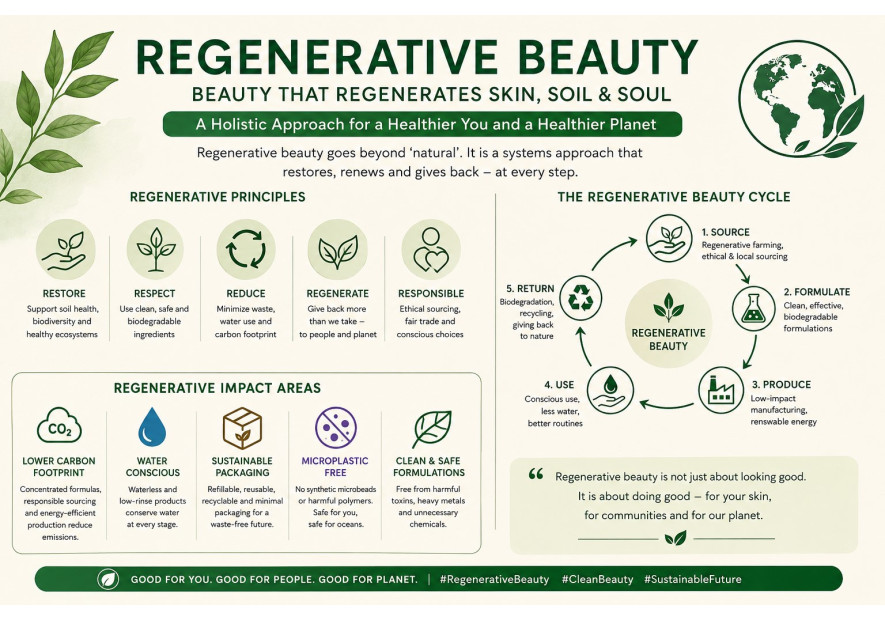
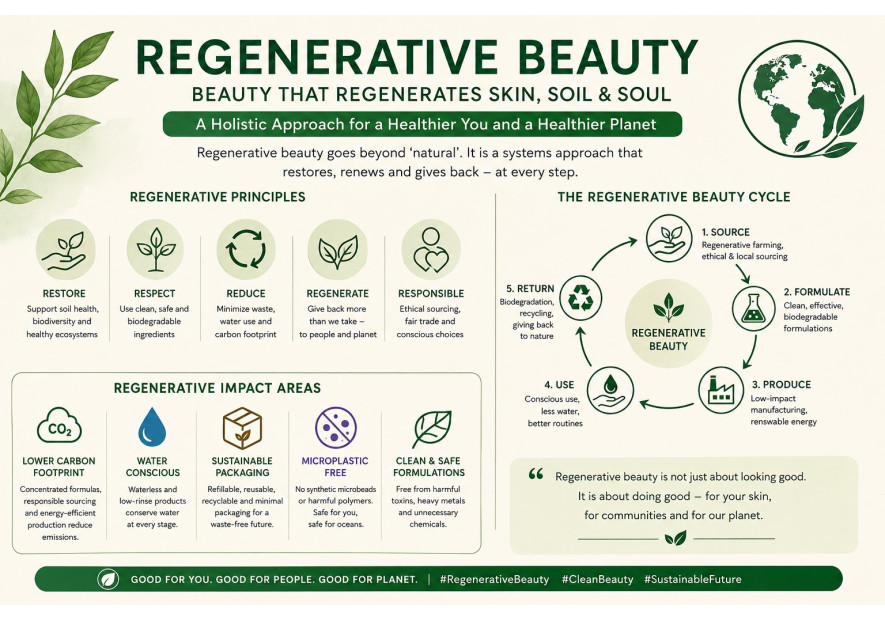
Regenerative beauty is not simply a product category. It is a systems approach. It connects skin biology, formulation science, traditional botanical knowledge, soil health, water responsibility, biodiversity, aroma science, packaging, carbon footprint and conscious consumption.
What Is Regenerative Beauty?
Regenerative beauty products are designed with respect for both human biology and planetary biology.
They are not judged only by texture, fragrance, colour, foam or instant feel. They are judged by their full life cycle and long-term impact.
A regenerative beauty product asks:
Where did the ingredient come from?
Was it grown or extracted responsibly?
Does it respect skin biology?
Does every ingredient have a purpose?
Is the formulation stable and safe when used as directed?
Does the packaging reduce waste?
Does the product reduce water and energy burden?
Does it support mindful use rather than overconsumption?
This is the difference between a product that is merely “natural” and a product that is truly regenerative.
The Beauty Industry Has a Hidden Footprint
Beauty products often look clean on the shelf. They smell pleasant, feel elegant and carry the language of purity. But behind that polished surface is a complex environmental footprint.
The global skincare products market reached about USD 172.7 billion in 2025 and is projected to reach about USD 241.1 billion by 2034, according to IMARC. This shows the scale of skincare consumption and why sustainability in this sector cannot remain a side conversation.
If beauty grows only through more products, more packaging, more actives, more claims and more consumption, the environmental burden will also grow.
Regenerative beauty asks us to grow differently.
GHG Emissions: Where Beauty’s Carbon Footprint Comes From
The greenhouse gas footprint of beauty does not begin in the bathroom. It begins much earlier — in farming, mining, petrochemicals, ingredient extraction, distillation, packaging, manufacturing and transport.
The Carbon Trust reports that sourcing raw materials accounts for around 30–50% of the beauty and personal care sector’s emissions. It also reports that consumer use of products, especially hot water used for shampooing, shaving, face washing and rinsing, can account for 40–80% of total emissions for some beauty companies.
This gives one clear message:
Beauty cannot become sustainable by changing the label alone. The whole life cycle must change.
Approximate GHG Hotspots in Beauty and Personal Care
| Segment | Main Emission Driver | Regenerative Beauty Response |
|---|---|---|
| Consumer use | Hot water for bathing, shampooing, cleansing, shaving and rinsing | Low-rinse, no-rinse, waterless and concentrated products |
| Raw materials | Plant oils, surfactants, fragrances, minerals, petrochemical inputs and deforestation-linked materials | Regenerative farming, responsible sourcing, local ingredients and low-impact formulation |
| Packaging | Plastic, mixed materials, decoration, small packs and low recyclability | Refill, reuse, bulk packs, mono-material packs and minimal packaging |
| Transport | Long supply chains and heavy diluted products | Concentrated products, professional packs and regional sourcing |
| End of life | Packaging disposal, wastewater and product residues | Biodegradable ingredients, recyclable packs and microplastic-free products |
The Carbon Trust’s indicative sector breakdown places consumer use at about 59%, raw-material sourcing at 30%, transportation at 5%, end-of-life treatment at 5% and manufacturing at about 1%. These are directional sector estimates, not fixed values for every product.
Why Consumer Use Matters So Much
Many people assume the biggest carbon footprint comes from factories or packaging. In rinse-off beauty products, the bigger footprint may come from how the product is used.
A shampoo, face wash or body wash may look sustainable because it contains natural ingredients. But if it requires long rinsing with hot water, its real carbon footprint may still be high.
This is why the future of sustainable skincare should include:
low-rinse cleansers
waterless face masks
powder ubtans
oil-based massage products
leave-on treatments
concentrated formulations
shorter spa protocols
consumer education on water temperature and rinsing time
For EcoPlanetStore, this is not only a sustainability discussion. It is a formulation and product design responsibility.
Water Footprint: The Invisible Ingredient in Beauty
Water is one of the most important but least discussed ingredients in cosmetics.
It is used in growing botanical raw materials, extraction, processing, equipment cleaning, heating, cooling, packaging and consumer use. It is also present inside many lotions, creams, gels, shampoos, cleansers and body washes.
A scientific review on water sustainability in cosmetics highlights that water is involved across the full cosmetic product life cycle — from product conception and production to packaging, distribution, consumer use and disposal. The review identifies waterless products, fast-rinse formulas and non-rinse formats as important strategies for sustainable water management.
This means regenerative skincare should not ask only:
“Is this product natural?”
It should also ask:
How much water does it carry?
How much water was used to produce it?
How much water does the user need to rinse it off?
What enters wastewater after use?
Waterless masks, dry herbal cleansers, ubtan powders, concentrated scrubs, massage oils, balm formats, low-rinse products and professional refill systems can all become part of a more water-conscious beauty system.
Packaging Waste: The Beautiful Outer Shell Has a Cost
Cosmetic packaging is one of the most visible sustainability challenges in beauty.
A life-cycle assessment study on cosmetic packaging notes that more than 120 billion units of cosmetics packaging were produced globally in 2018. Many cosmetic packs are small, multi-material, laminated, decorated or difficult to recycle. The same study found that reuse can offer stronger environmental benefit than simple material reduction when designed properly.
This is important for spas, salons and professional skincare users.
A 1 kg professional pack, refill format or reusable container may often be more environmentally sensible than many small decorative retail packs.
Regenerative beauty should prioritise:
reduction before decoration
reuse before disposal
refill before single-use
mono-material where possible
professional pack sizes
minimal secondary packaging
clear recycling logic
less plastic glamour, more product responsibility
A beautiful pack should not become ugly waste.
Microplastics: Clean Skin Should Not Pollute Rivers
Microplastics are one of the most uncomfortable truths in personal care.
UNEP identifies plastic particles in personal care and cosmetic product formulations, especially microbeads, as a source of micro-sized plastic litter that can enter the marine environment.
India also needs deeper attention. A 2024 study analysed 45 personal care products in the Indian market across face wash, face scrub, shower gel and body scrub categories to assess microbead emissions. Reporting on this research noted that microbeads were found in 45% of analysed personal care products in India.
This makes one thing clear:
A scrub that cleans the skin should not contaminate water.
Regenerative skincare must therefore move away from synthetic microbeads and unnecessary non-biodegradable polymer particles. Natural exfoliant systems such as salt, sugar, clays, fruit powders, seed powders, herbal powders and biodegradable materials are better aligned with ecological responsibility when properly processed and formulated.
PFAS, Phthalates, Heavy Metals and Mercury: Clean Label Must Be Scientifically Honest
Clean beauty cannot be only a marketing slogan. It must be rooted in toxicological awareness, formulation transparency and responsible sourcing.
The FDA notes that cosmetics that may contain phthalates include nail polishes, hair sprays, aftershave lotions, cleansers and shampoos. The FDA has also surveyed cosmetics for contaminants including arsenic, cadmium, chromium, cobalt, lead, mercury and nickel.
This does not mean every cosmetic product is unsafe. It means responsible beauty must be scientifically honest.
A clean label product should not use fear-based language. It should use better formulation discipline, better sourcing, better testing, better documentation and better consumer education.
Regenerative Skincare: From Surface Beauty to Skin Intelligence
The skin is not a passive surface. It is a living organ.
It has a barrier.
It has pH balance.
It has microbiome interaction.
It responds to climate, sweat, pollution, UV exposure, stress, diet, friction, harsh cleansing and unsuitable products.
Therefore, regenerative skincare must be dermatology-aware.
It should support:
mild cleansing
barrier care
hydration
balanced exfoliation
microbial safety
seasonal skin needs
safe use of botanicals
avoidance of unnecessary irritants
minimal but effective routines
A product may be herbal, Ayurvedic or natural, but it must still respect skin science.
Organic Skin Care: A Responsible Foundation, Not the Final Destination
Organic skin care is an important foundation because ingredient quality begins in the soil.
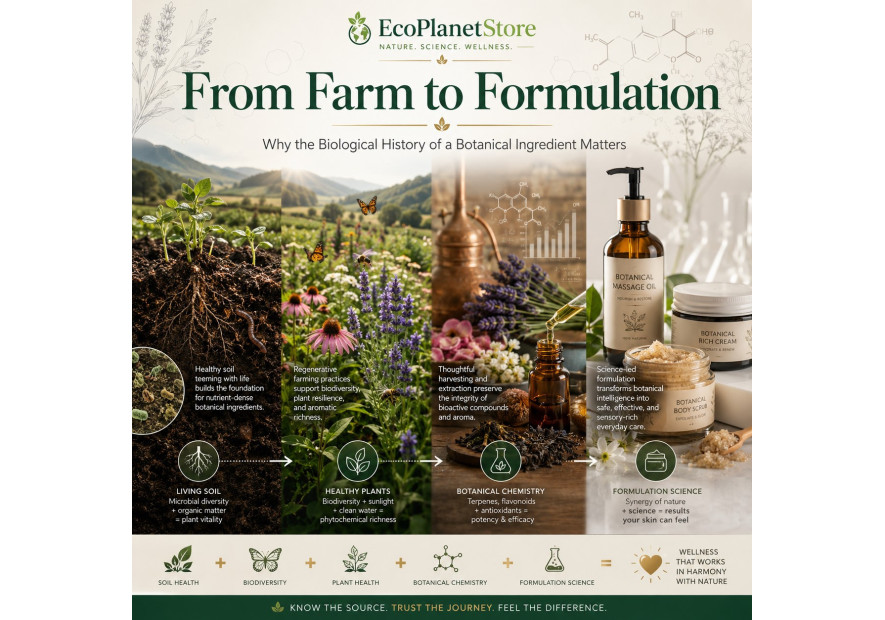
Healthy soil supports microbial life, plant resilience, mineral cycling and biodiversity. Herbs, flowers, roots, seeds and aromatic plants are not just raw materials; they are biological expressions of the land.
But organic alone is not enough.
An organic product can still be over-formulated.
A natural product can still be unstable.
A herbal product can still be poorly preserved.
A sustainable-looking product can still create unnecessary waste.
Regenerative skincare goes beyond certification. It looks at the whole system — soil, sourcing, formulation, packaging, user behaviour and environmental return.
Ayurvedic and Herbal Skin Care: Traditional Wisdom With Modern Responsibility
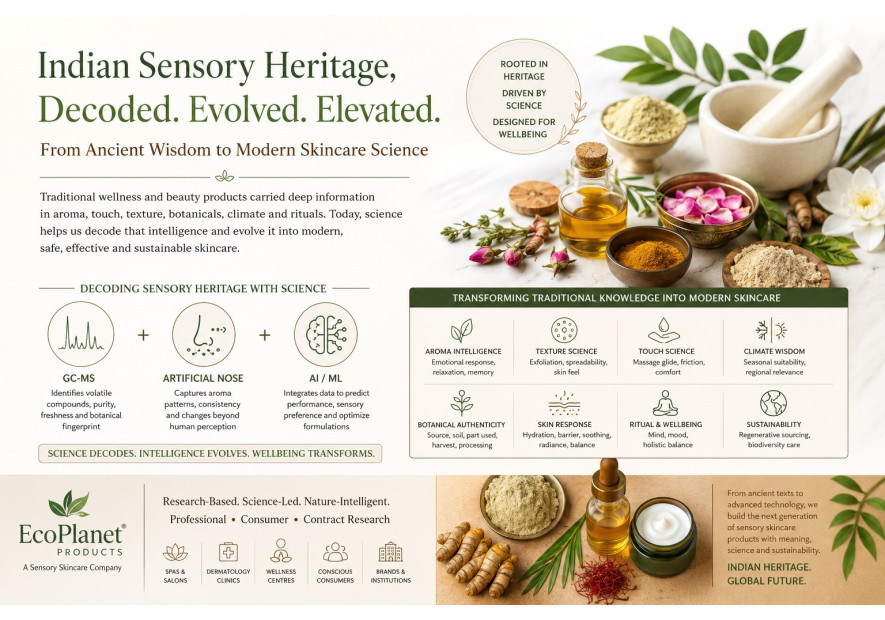
India has a deep heritage of Ayurvedic and herbal skin care. Ayurveda has always connected skin with season, lifestyle, food, constitution, oiling, cleansing, herbs, sleep and daily routine.
Ingredients such as turmeric, neem, tulsi, sandalwood, vetiver, aloe vera, rose, amla, manjistha, mulethi and sesame oil have been used in traditional beauty and wellness practices for generations.
But modern Ayurvedic skincare must be interpreted responsibly.
It should respect:
botanical authenticity
correct ingredient selection
safe concentration
hygienic processing
skin compatibility
product stability
preservation
responsible claims
professional usage guidelines
Herbs should not be used only to decorate the label. A herb has chemistry, aroma, texture, seasonality, origin and ecological story. The same plant grown in different soil, climate and processing conditions may behave differently.
In regenerative herbal skincare, every herb must have a role. It may support cleansing, cooling, soothing, oil-balancing, exfoliation, moisturising, aroma or skin conditioning. But it must be selected and processed with knowledge.
This is where botanical wisdom becomes professional formulation.
Clean Label Skin Care: Every Ingredient Must Have a Reason
Clean label skin care means clarity and honesty.
It does not mean a product must have only two or three ingredients. It means every ingredient should have a purpose.
A clean label formulation avoids:
unnecessary fillers
exaggerated claims
greenwashing
decorative ingredients without function
excessive fragrance
unclear ingredient stories
needless complexity
The clean label question is simple:
Why is this ingredient here?
If the answer is clear, the product becomes easier to trust, explain and use.
Minimalist Skincare: Less Load, Better Logic
The skin does not always need more products. Many times, it needs fewer products used correctly.
Minimalist skincare is not a rejection of skincare. It is a rejection of unnecessary burden.
A practical minimalist routine focuses on:
cleansing
gentle exfoliation when needed
hydration
moisturising
barrier support
seasonal care
sun and pollution protection
Too many actives, too many fragrances and too many product layers may disturb sensitive skin. Minimalist skincare also reduces waste, packaging, manufacturing load and consumer confusion.
In regenerative beauty, minimalism is intelligent simplicity.
EcoPlanetStore’s View: Professional Skincare With Planet Responsibility
At EcoPlanetStore, we see skincare not only as product manufacturing, but as a knowledge-led wellness practice.
Our work is rooted in aromatherapy, natural ingredients, spa and salon practice, skin care formulation, clean label thinking and sustainability.
We believe professional skincare should be:
effective but not excessive
natural where possible
scientific where necessary
Ayurvedic in inspiration
dermatology-aware in safety
clean label in formulation
minimalist in philosophy
sustainable in packaging
regenerative in vision
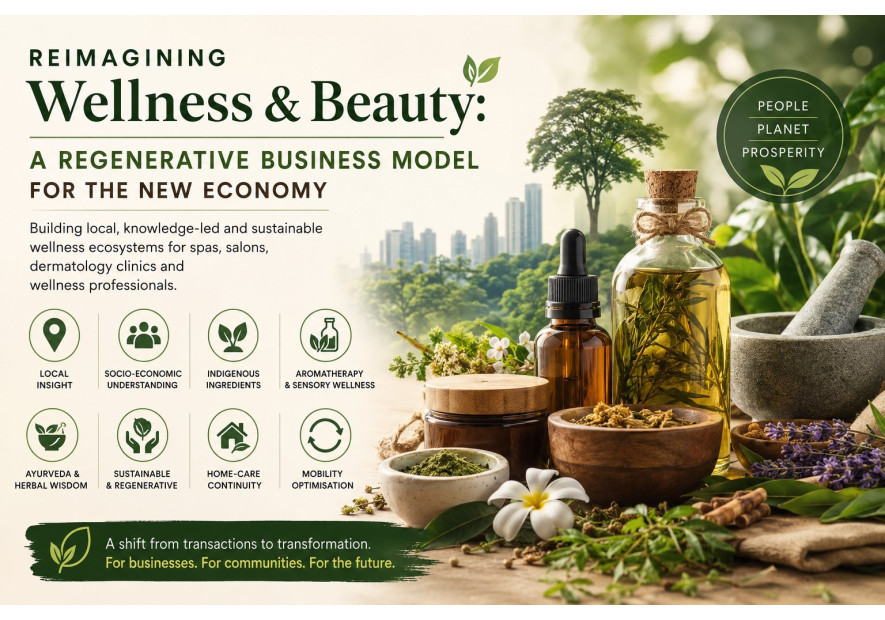
For spas, salons, wellness centres and professional users, regenerative beauty is practical. It means correct dosage, reduced wastage, professional packs, responsible ingredients, microplastic-free exfoliation, low-rinse protocols and better client education.
For consumers, it means buying less but better, using products correctly and avoiding trend-driven overconsumption.
Conclusion: The Future of Beauty Is Regenerative
The next generation of beauty will not be defined by one word alone.
It will not be only natural.
It will not be only organic.
It will not be only Ayurvedic.
It will not be only dermatology-led.
It will not be only clean label.
It will not be only minimalist.
It will not be only sustainable.
The future will be integrative.
Regenerative wellness and beauty brings these ideas together into a larger framework.
It respects the skin.
It respects the soil.
It respects water.
It respects plants.
It respects aroma.
It respects professionals.
It respects consumers.
It respects the planet.
The future of skincare and beauty products is not just about what we apply on the skin. It is about how we think, formulate, source, manufacture, use and return to nature.
That is the real meaning of regenerative beauty.
