

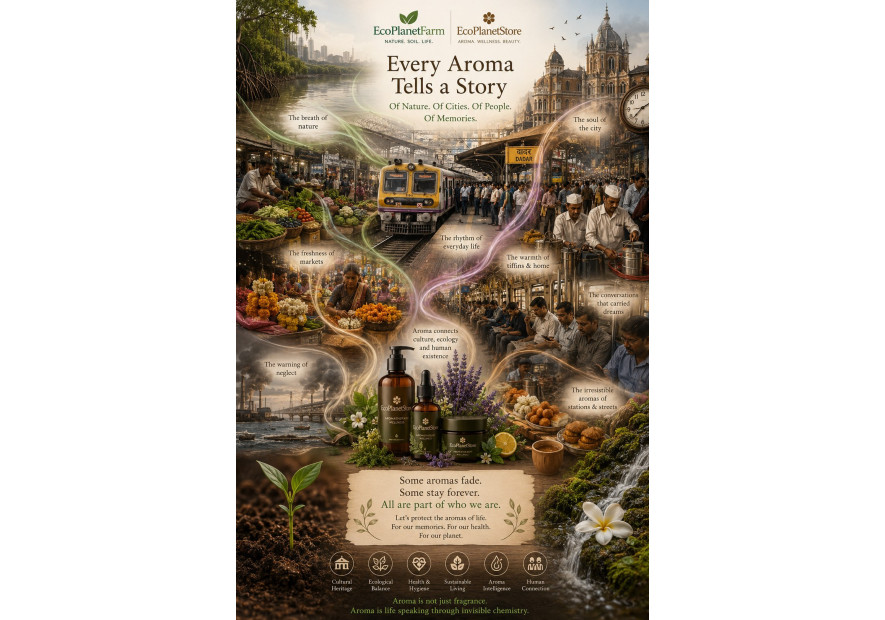
Indian Sensory Heritage & Research-Based Skincare | EcoPlanet®
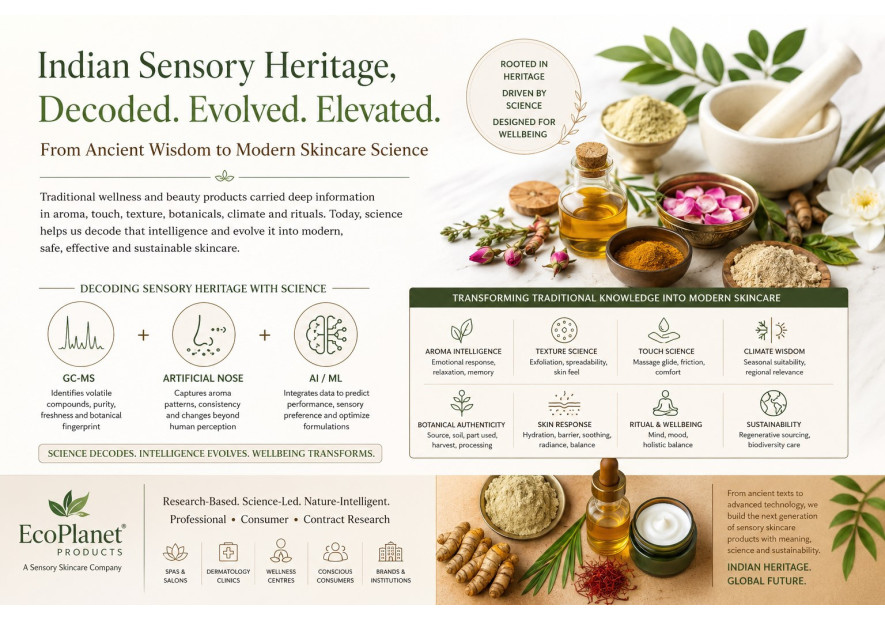
Indian sensory heritage wellness and beauty products were advanced knowledge systems carrying information through aroma, touch, texture, botanicals, climate and ritual experience. This blog explores how EcoPlanet® can decode this heritage using GC-MS, artificial nose technology, AI/ML and AIS — Aroma Intelligence System — to evolve modern, sustainable and research-based skincare for professionals, consumers and contract innovation.
Indian Sensory Heritage and the Future of Research-Based Wellness & Beauty
Ancient roots, sustainability, AIS and the reinvention of modern skincare
Indian wellness and beauty traditions were never primitive household mixtures. They were advanced, observation-based and sensory-intelligent knowledge systems developed through generations of practice, refinement and lived experience.
Before modern skincare language arrived, Indian homes already understood aroma, touch, texture, temperature, season, skin feel, body response, botanical quality and ritual experience. Beauty was not separated from wellness. Skincare was not separated from climate. Aroma was not separated from emotion. Plants were not separated from soil, season and biodiversity.
This is what we may call Indian sensory heritage.
It lived in ubtan, herbal oils, bath powders, lepam, floral waters, hair oils, foot rituals, body massage, herbal potli, aromatic cleansing, bridal care and seasonal skincare practices. These were not random home remedies. They were advanced information systems expressed through natural materials, rituals and sensory experience.
Ancient roots of sensory wellness
Indian beauty and wellness traditions have deep ancient roots. Classical Ayurvedic and traditional knowledge systems described external care practices such as Abhyanga — oil massage, Udvartana — herbal powder massage, Lepa and Pralepa — topical applications, Mukha Lepa — facial applications, herbal bathing, aromatic botanicals and seasonal care.
These practices were not only about appearance. They were connected with body balance, relaxation, cleansing, nourishment, skin texture, freshness, complexion, comfort and daily wellbeing.
A traditional formulation carried several layers of intelligence.
Aroma indicated freshness, identity and emotional effect.
Texture guided exfoliation, cleansing and skin feel.
Touch created relaxation through massage and application.
Temperature added cooling or warming comfort according to season.
Botanicals brought plant-based functional wisdom.
Ritual gave meaning, memory and emotional connection.
Climate influenced ingredient choice and application method.
This was not primitive beauty. It was a sophisticated sensory culture.
From culture to industry
For generations, many wellness and beauty preparations were made at home. Women prepared ubtan, oils, powders, packs and bath rituals using local ingredients. Recipes were passed through families and often shared with neighbours. Beauty was personal, community-based and closely linked with nature.
But society changed.
Urbanisation, nuclear families, smaller homes, faster lifestyles, less time, reduced access to raw ingredients and changing aspirations slowly reduced the practice of preparing traditional products at home. Many recipes disappeared from daily life. Some survived only during weddings, festivals or special rituals. Others were simplified, commercialised or industrialised.
This evolution was necessary in one sense. Modern consumers and professionals need products that are safe, stable, hygienic, easy to use and consistent. Spas, salons, dermatology clinics and wellness centres need professional-quality products with standardised performance and reliable supply.
However, during industrialisation, much of the deeper sensory intelligence was lost.
Western influence and borrowed beauty language
The modern wellness and beauty industry in India is strongly influenced by Western product formats and marketing language: serums, toners, actives, masks, barrier repair, anti-ageing, brightening, collagen support and exfoliating acids.
These concepts have value, but India’s future skincare industry should not depend only on borrowed formats and borrowed claims.
Indian beauty was not built only around problem-solution skincare. It was built around experience, ritual, climate, aroma, touch, texture and body-mind wellbeing.
A turmeric formulation should not be reduced only to a “brightening mask.”
A sandalwood oil should not be reduced only to a “fragrance product.”
An ubtan should not be reduced only to a “scrub.”
A herbal potli should not be reduced only to a “massage accessory.”
Each of these carries deeper information. The real opportunity is to decode that information and evolve it into modern wellness and beauty products.
Reinvention, not blind revival
The future is not about going backwards. Traditional recipes cannot simply be copied and sold without research, safety, stability and quality control.
The future is also not about copying Western skincare and adding Indian ingredients for marketing.
The real path is reinvention through research.
Indian sensory heritage must be studied as a knowledge system and translated into modern product science. This means asking deeper scientific questions:
What does the aroma indicate?
How does texture influence skin feel?
How does particle size affect exfoliation?
How does oil glide affect massage experience?
How does climate affect product performance?
How does botanical source influence quality?
How does ritual application influence user response?
How does skin feel translate into consumer acceptance?
This is how heritage becomes innovation.
Research validation: decoding hidden information
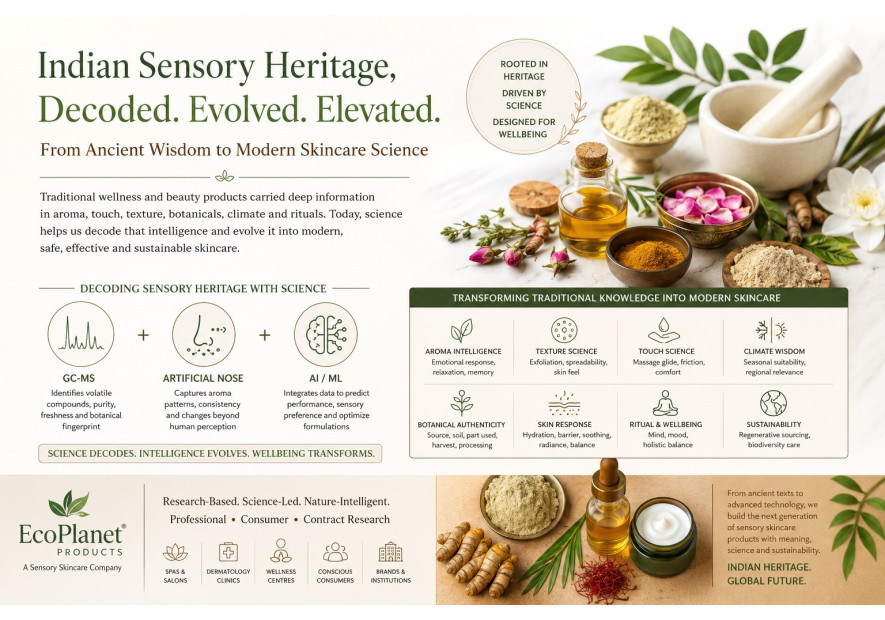
To evolve sensory heritage into modern skincare, research is essential. Traditional wisdom must be decoded using modern tools.
GC-MS — Gas Chromatography–Mass Spectrometry can identify volatile aroma molecules in essential oils, herbs, flowers, resins, spices and botanical extracts. It can help study freshness, adulteration, oxidation, botanical origin and batch-to-batch consistency.
An artificial nose, or electronic nose, can detect aroma patterns and odour signatures. It can help classify raw materials, monitor storage changes, compare product aroma profiles and maintain sensory consistency.
AI/ML — Artificial Intelligence and Machine Learning can integrate GC-MS data, artificial nose signals, sensory-panel feedback, skin-feel studies, texture analysis, climate data, botanical sourcing, formulation composition and consumer response.
Together, these tools can help convert traditional sensory experience into measurable knowledge.
This is not about replacing tradition. It is about revealing the science hidden within it.
Sustainability as the original strength
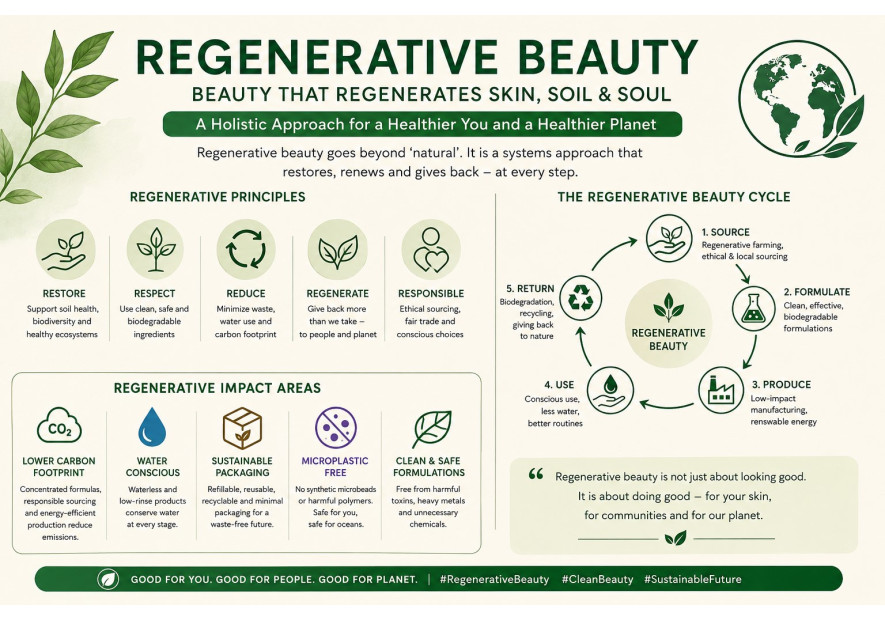
Indian sensory heritage was naturally linked with sustainability. Many traditional practices used local ingredients, seasonal botanicals, low-waste preparation, reusable vessels, minimal packaging and community-based sharing.
Modern industry must recover that sustainability wisdom while improving safety and quality.
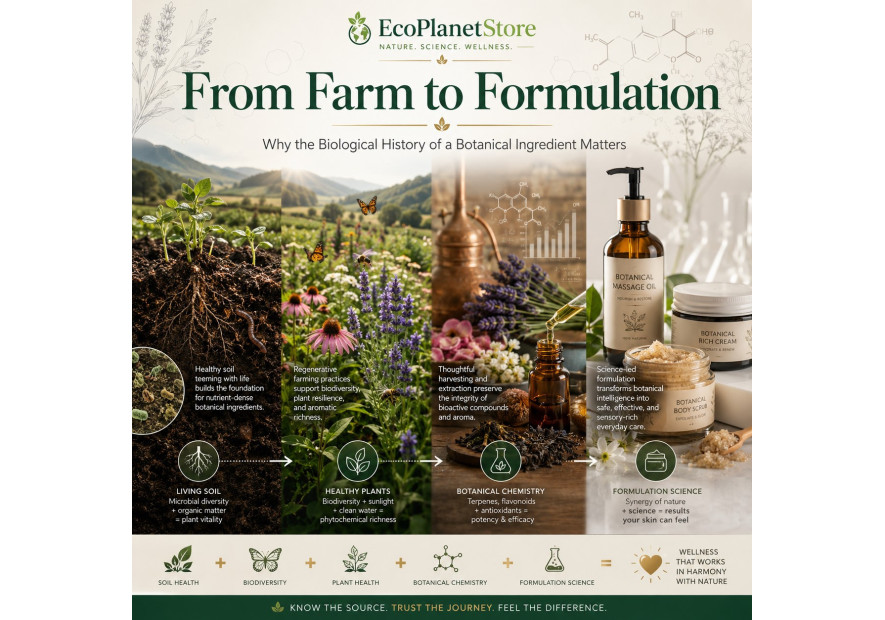
Future wellness and beauty products should focus on regenerative sourcing, local botanicals, biodiversity-linked raw materials, reduced plastic packaging, professional bulk packs, refill systems, low-waste salon and spa use, biodegradable ingredients, farm-to-formulation traceability and climate-sensitive formulation design.
Sustainability should not be an added marketing claim. It should become part of the product’s origin, formulation, packaging, use and disposal.
AIS — Aroma Intelligence System
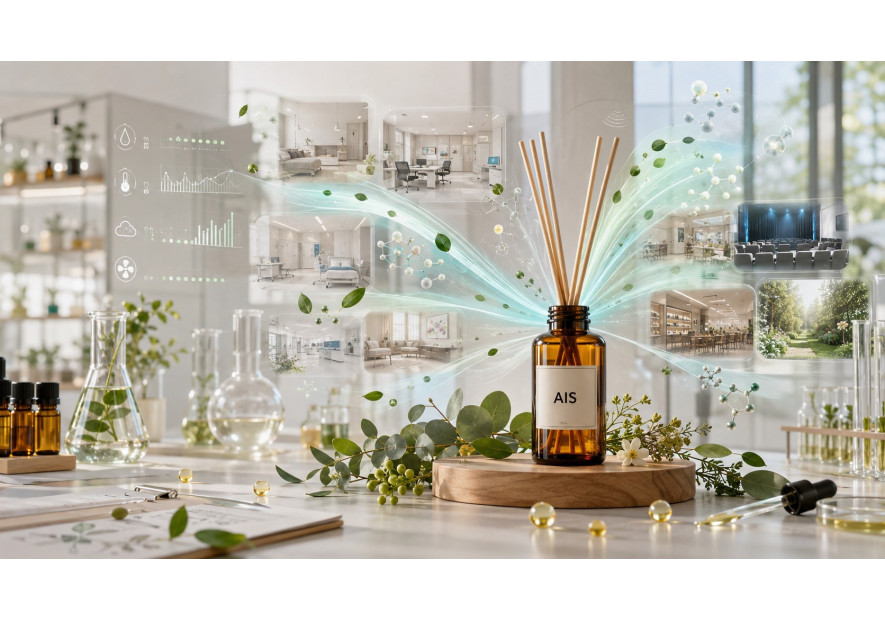
This is where AIS — Aroma Intelligence System can become a future research framework.
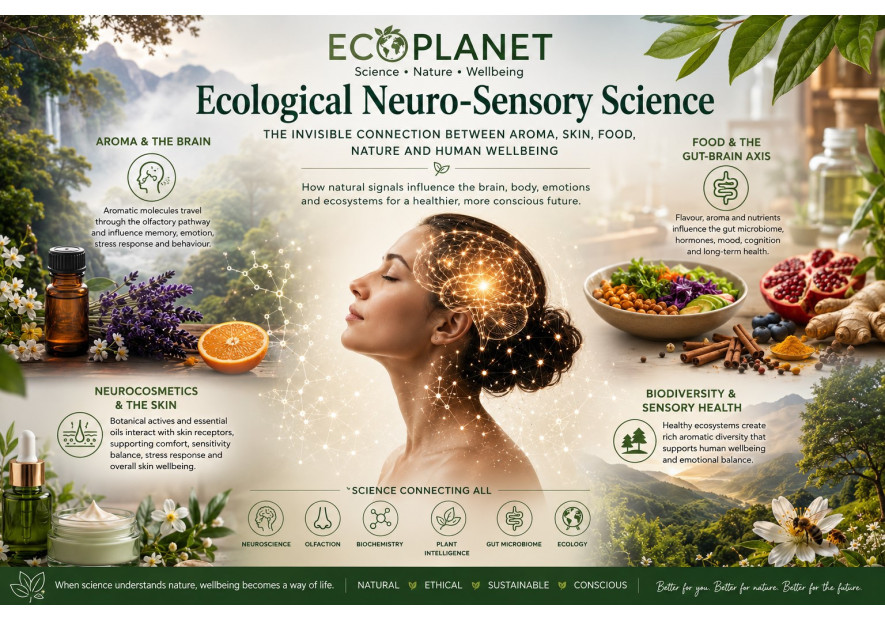
AIS can study aroma not merely as fragrance, but as an information layer connecting plant chemistry, soil, biodiversity, climate, sensory perception, skin feel, mood and product performance.
AIS can bring together GC-MS aroma chemistry, artificial nose aroma-pattern recognition, human sensory evaluation, AI/ML-based formulation learning, skin-feel and texture science, botanical and ecological data, climate suitability, professional treatment feedback and consumer experience data.
For example, a massage oil can be studied for aroma profile, oil glide, skin feel, relaxation response, absorption perception and professional usability.
An ubtan can be studied for botanical aroma, particle size, paste texture, exfoliation behaviour, after-feel and seasonal suitability.
A foot soak can be studied for aroma release, mineral feel, fatigue response, water interaction and relaxation experience.
This is how sensory heritage can become a modern research-based product platform.
EcoPlanet® Products and the opportunity ahead
EcoPlanet® Products is well placed to lead this direction as a research-based sensory skincare and wellness company.
The opportunity is not limited to professional products for spas, salons and dermatology clinics. It also extends to conscious consumers, wellness centres, beauty brands, ingredient companies, institutions and contract research partners.
EcoPlanet® can build leadership through three connected directions:
Professional sensory skincare for spas, salons, dermatology clinics and wellness centres.
Consumer sensory wellness and beauty products for people seeking authentic, research-based and sustainable skincare.
Contract research and product development for brands and institutions needing formulation development, sensory evaluation, aroma profiling, product standardisation and sustainability-linked innovation.
This gives EcoPlanet® a strong and original position: not merely natural products, not merely aromatherapy, not merely traditional beauty, but research-based sensory skincare rooted in Indian heritage and evolved for the modern world.
Future of wellness and beauty products
The future of beauty will not be only about claims. It will be about experience, evidence, sustainability and personal relevance.
Future wellness and beauty products will need to combine ancient roots, modern formulation science, sensory richness, research validation, aroma intelligence, climate sensitivity, sustainable sourcing, professional usability, consumer trust and emotional connection.
India has a unique opportunity to create a new category of wellness and beauty products that are not copied from Western models, but evolved from its own advanced sensory knowledge systems.
Conclusion
Indian sensory heritage is not nostalgia. It is not primitive beauty. It is an advanced cultural, botanical, ecological and sensory knowledge system waiting to be decoded.
The next step is research, validation and reinvention.
Through GC-MS, artificial nose technology, AI/ML, sensory science, sustainability and AIS — Aroma Intelligence System — traditional wellness and beauty knowledge can evolve into modern skincare products for professionals, consumers and contract innovation.
Indian sensory heritage is not only the past of beauty. It can become the future of research-based, sustainable wellness and skincare.
