
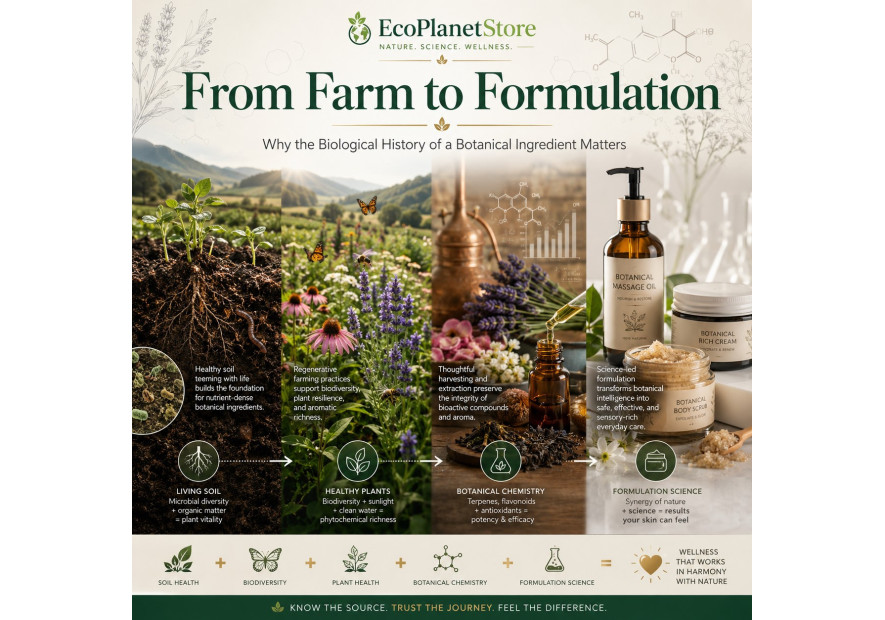
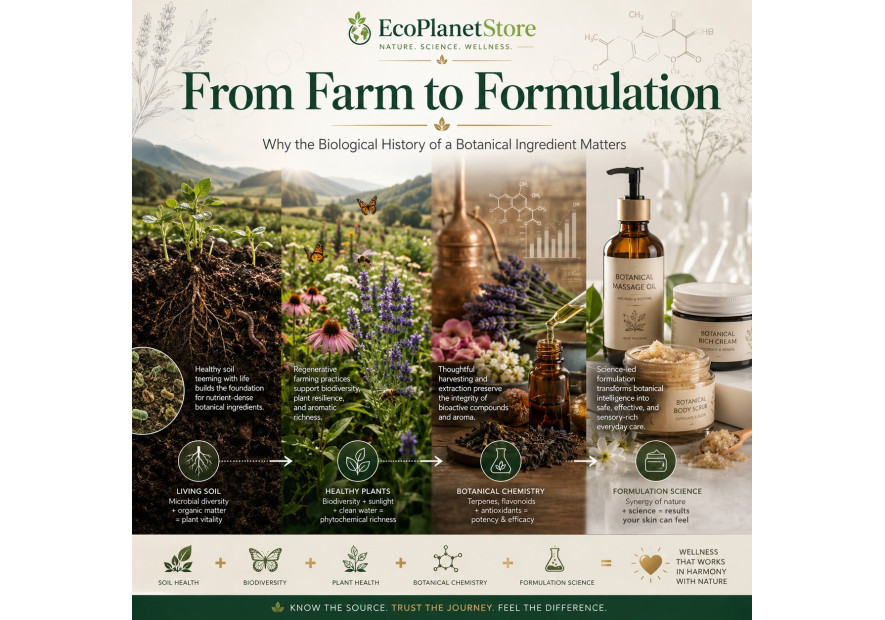
From Farm to Formulation: Why the Biological History of a Botanical Ingredient Matters
Discover how soil, climate, harvest timing, extraction and storage influence botanical ingredient quality—and why scientific formulation is essential for professional skincare, aromatherapy and wellness products.
From Farm to Formulation: Why the Biological History of a Botanical Ingredient Matters
The quality of botanical skincare and aromatherapy begins long before formulation
When we look at a massage oil, facial cream, body scrub, clay wrap or diffuser blend, we usually focus on the finished product.
We may examine its texture, aroma, colour, absorption, stability and professional application. But the real journey of a botanical ingredient begins much earlier—inside a seed, root, leaf, flower, fruit, bark or resin growing within a living ecosystem.
Before an essential oil, botanical extract or plant-derived ingredient reaches a formulation, it has already been influenced by:
- Plant variety and genetic identity
- Soil conditions and microbial activity
- Rainfall, temperature and sunlight
- Water availability
- Biodiversity surrounding the plant
- Plant maturity and harvest timing
- Post-harvest handling
- Extraction and storage conditions
Together, these factors form the biological history of the ingredient.
For professional skincare and wellness products, this history matters because formulation quality cannot be separated entirely from the origin and condition of the raw materials used.
A botanical ingredient is not an isolated chemical
Two plants belonging to the same species may not always produce identical sensory or chemical profiles.
Their growing conditions may differ. One may experience high heat, another excessive rainfall. One may grow in biologically active soil, while another may be cultivated under intensive input conditions. Their maturity at harvest, drying method and storage environment may also be different.
These variations can influence the character of the botanical material.
In aromatic plants, the differences may be noticed through changes in:
- Fragrance intensity
- Freshness
- Sweet, green, woody, citrus or spicy notes
- Volatile composition
- Colour
- Oxidative stability
- Overall sensory behaviour
This does not mean that every naturally grown ingredient is automatically superior. It means that botanical quality must be understood as the result of a complete biological and processing journey—not only as a name printed on an ingredient label.
Soil is the first formulation environment
A botanical formulation may be manufactured in a controlled facility, but the plant itself is first “formulated” by nature.
Its first production environment is the soil.
Roots interact with water, minerals, organic matter and soil microorganisms. These relationships influence plant growth and biological activity. Soil structure, drainage, nutrient availability and microbial diversity may all affect how a plant develops.
A healthy agricultural system therefore considers more than the addition of nutrients. It also considers:
- Soil organic matter
- Moisture retention
- Root-zone biology
- Mulching
- composting
- biodiversity
- reduced ecological disturbance
Regenerative agricultural practices aim to improve these relationships over time.
For botanical wellness and beauty, this creates an important question:
Could healthier soil and more balanced ecosystems contribute to more distinctive, resilient or consistent botanical materials?
The answer cannot be assumed. It must be measured through field observation, chemical analysis and sensory evaluation.
However, the question is scientifically important because the quality of a botanical ingredient begins with the biological system that produced it.
Climate can shape plant chemistry and aroma
Plants continuously respond to their surroundings.
Temperature, rainfall, humidity, sunlight, wind and water stress influence plant physiology. These environmental conditions may also affect the production and release of volatile organic compounds, commonly called VOCs.
VOCs contribute to the natural aroma of:
- Flowers
- Leaves
- Herbs
- Spices
- Fruits
- Wood
- Resins
- Essential oils
Aromatic expression may change with season, time of day, flowering stage, rainfall or heat.
For example, a flower may appear visually normal while its fragrance intensity feels different from a previous season. A fruit may release a stronger aroma as it matures. Leaves may produce a noticeably different scent after crushing, heat exposure or insect damage.
Such sensory observations are useful, but they are not enough to establish quality on their own.
Aroma should be interpreted together with:
- Botanical authentication
- Supplier documentation
- Extraction method
- Storage history
- Physical and chemical testing
- Stability assessment
- Professional sensory evaluation
Aroma can provide information, but it must be scientifically decoded.
Harvest timing changes the ingredient journey
A plant is not chemically static throughout its life.
The balance of aromatic and other plant compounds may change during:
- Early vegetative growth
- Flower-bud formation
- Full flowering
- Fruit development
- Ripening
- Seed maturity
- Seasonal dormancy
The timing of harvest can therefore influence the character of the collected botanical material.
Harvesting too early may produce an underdeveloped sensory profile. Harvesting too late may increase deterioration, oxidation or loss of delicate volatiles. The best harvest stage may also depend on the intended use.
A botanical intended for distillation may require a different harvest approach from one intended for drying, extraction, infusion or powdering.
Time of day may also matter for highly aromatic plants because volatile release can change with temperature and plant physiology.
This is why botanical sourcing requires more than purchasing an ingredient by its common name. The questions should include:
- Which botanical species and variety was used?
- Which plant part was collected?
- At what stage was it harvested?
- How was it dried or processed?
- How long was it stored?
- Under what temperature and packaging conditions?
These details form part of ingredient quality.
Post-harvest handling can preserve or damage quality
Once a plant is harvested, biological deterioration begins.
Exposure to excessive heat, moisture, oxygen, sunlight or microbial contamination can change the raw material before extraction or formulation.
Poor drying may encourage spoilage. Excessive drying temperatures may remove desirable volatile compounds. Improper storage may cause oxidation, loss of aroma or contamination.
Essential oils and botanical extracts are also sensitive to:
- Air exposure
- Light
- Heat
- Reactive packaging
- Long storage periods
- Repeated opening and closing
Even an excellent crop can produce a disappointing ingredient when post-harvest practices are weak.
The biological history of an ingredient therefore continues after harvest. It includes every stage between the farm and the formulation unit.
Extraction does not erase the plant’s history
Extraction converts plant material into a usable form, but it does not remove the influence of origin.
Different extraction methods recover different groups of compounds.
These may include:
- Steam distillation
- Cold pressing
- Infusion
- Maceration
- Solvent extraction
- Water extraction
- Supercritical-fluid extraction
The selected method affects the final aroma, colour, solubility, concentration and sensory behaviour of the ingredient.
A steam-distilled essential oil, for example, will not represent the complete chemistry of the original plant. It reflects the volatile components that are carried through the distillation process.
Similarly, a botanical extract may be rich in certain soluble compounds while containing little of the original plant aroma.
A formulation scientist must therefore understand both the botanical source and the extraction method.
The ingredient name alone does not explain the full material.
Aroma is important—but aroma alone is not proof of quality
In aromatherapy and sensory wellness, aroma is central to the product experience.
It can influence whether a professional treatment feels:
- Refreshing
- Relaxing
- Grounding
- Uplifting
- Warming
- Cooling
- Floral
- Herbal
- Woody or citrus-dominant
But a strong aroma does not automatically mean high quality.
An intense fragrance may result from natural concentration, oxidation, adulteration or the addition of synthetic aromatic materials. Conversely, some authentic ingredients may have a softer aroma because of variety, season or storage.
Quality evaluation should therefore combine sensory observation with appropriate technical controls.
These may include:
- Botanical identity
- Certificate of analysis
- Physical parameters
- Chromatographic profiling where necessary
- Microbiological quality
- Contaminant assessment
- Stability testing
- Supplier traceability
- Batch consistency
The nose is an important scientific instrument, but it should not work alone.
Formulation science transforms raw materials into professional products
A botanical ingredient does not become an effective professional product simply because it is natural.
It must be formulated correctly.
A finished massage oil, cream, scrub or body wrap requires attention to:
- Ingredient compatibility
- Safe usage levels
- Oxidative stability
- Microbial protection
- Texture and spreadability
- Skin feel
- Packaging compatibility
- Product stability
- Intended professional application
- Regulatory and cosmetic compliance
Essential oils, for example, must be used at suitable concentrations. More essential oil does not necessarily produce a better product. Excessive concentration may create an unpleasant aroma, instability or skin-sensitisation risk.
The role of formulation science is to respect the biological character of the ingredient while converting it into a safe, stable and practical product.
Nature provides the material. Science determines how responsibly it is used.
Why this matters to spa, salon and wellness professionals
Professionals do not purchase only ingredients. They purchase consistency, performance and treatment experience.
A massage therapist expects an oil to provide suitable glide without becoming excessively greasy. A salon professional expects a scrub to spread evenly and rinse appropriately. A wellness centre requires aroma consistency across treatments. A dermatology or aesthetic clinic may require products with clearly defined cosmetic use and predictable application behaviour.
Understanding the biological history of ingredients helps professionals ask better questions:
- Is the botanical material authentic?
- Is the aroma naturally derived?
- Has the ingredient been stored properly?
- Is the formulation stable?
- Is the product appropriate for the intended professional use?
- Are cosmetic claims responsible and supportable?
This approach moves botanical beauty beyond decorative storytelling.
It connects agriculture, analytical science, sensory evaluation and formulation technology.
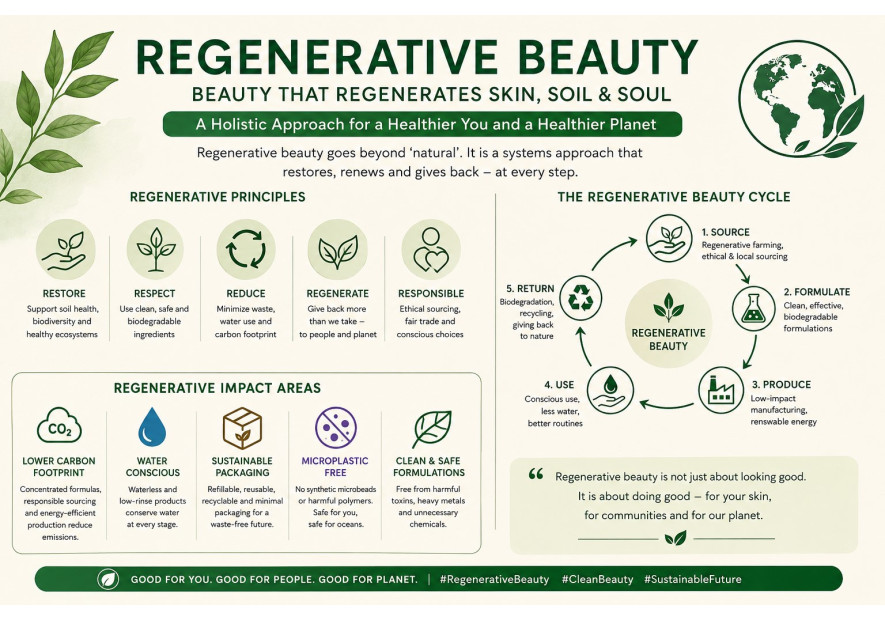
From regenerative agriculture to regenerative beauty
Regenerative beauty should mean more than adding natural-looking imagery to packaging.
A genuinely regenerative approach should consider the full system:
Soil → biodiversity → plant health → responsible harvesting → ingredient processing → scientific formulation → professional use → packaging and waste
This wider view connects human wellbeing with ecological wellbeing.
It also reminds us that a botanical ingredient is not an unlimited industrial resource. It comes from land, water, climate, labour and biodiversity.
Responsible beauty should therefore aim to:
- Use botanical materials thoughtfully
- Avoid unnecessary over-formulation
- Reduce ingredient and packaging waste
- Support responsible cultivation
- Improve product durability and usefulness
- Respect traditional knowledge without making unsupported claims
- Apply modern science to safety and consistency
The objective is not to romanticise nature. It is to work with nature more intelligently.
The EcoPlanet approach
EcoPlanet® develops aromatherapy, skincare and wellness formulations for spas, salons, dermatology and aesthetic clinics, wellness centres and professional therapists.
Our approach combines:
- Botanical knowledge
- Aromatherapy
- Food and formulation science
- Olfaction and sensory observation
- Professional treatment requirements
- Responsible cosmetic positioning
- Sustainability and regenerative thinking
EcoPlanetFarm extends this work upstream by observing relationships among soil, climate, biodiversity, plant behaviour and natural aroma.
Together, these perspectives create a continuous knowledge pathway:
Living soil → healthy plants → botanical chemistry → aroma → formulation → sensory wellness → planetary wellbeing
The purpose is not to claim that every ecological observation immediately becomes a commercial product benefit.
The purpose is to understand the complete system more carefully.
The future of botanical quality is traceable, sensory and scientific
The future of botanical skincare and aromatherapy will require greater transparency.
Consumers and professionals will increasingly want to know not only what an ingredient is called, but also:
- Where it came from
- How it was cultivated
- When it was harvested
- How it was processed
- How its identity was confirmed
- How it behaves in the final formulation
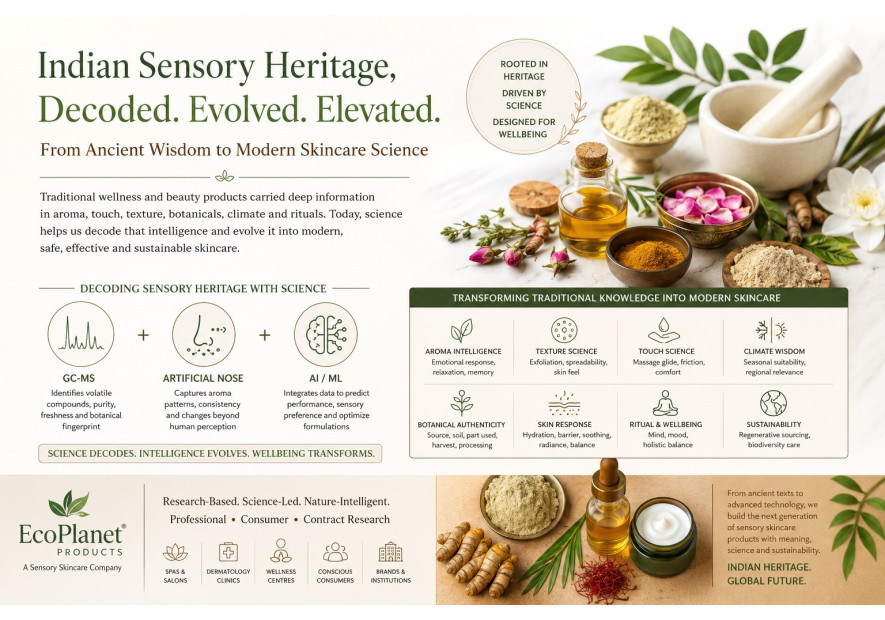
Emerging technologies may eventually help us understand botanical materials in greater detail through volatile profiling, electronic-nose sensing, analytical chemistry and artificial intelligence.
But technology should not replace observation.
It should connect traditional sensory intelligence with measurable data.
Every botanical ingredient carries a biological history.
The responsibility of the formulator is to understand that history, preserve what is valuable, remove what is unsafe and create a product that performs consistently in professional hands.
The formulation may be completed in the laboratory, but its story begins in the living landscape.
About EcoPlanet®
EcoPlanet® manufactures and supplies natural aromatherapy, skincare and wellness products for spas, salons, dermatology and aesthetic clinics, wellness centres and professional therapists across India.
Our formulations combine botanical ingredients, essential oils, sensory science and professional product-development experience with a wider commitment to sustainability and planetary wellbeing.
