
Essential Oils in Skincare: Aroma & Function | EcoPlanet
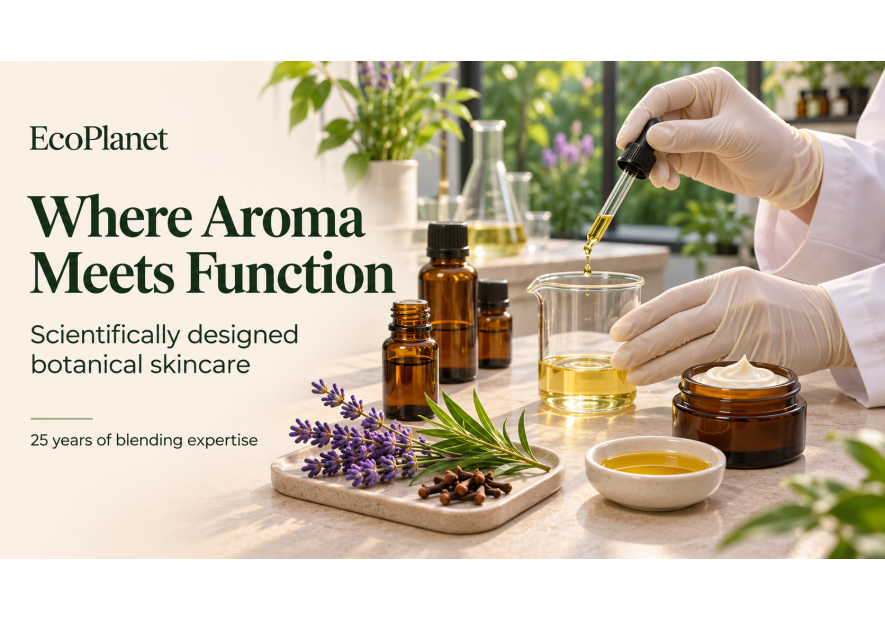
Discover how essential oils combine natural fragrance with functional potential, and how EcoPlanet’s 25 years of blending expertise shapes clean botanical skincare tailored to professional treatments and distinctive client experiences.
Worked for 3m 12s
Essential Oils in Professional Skincare: Where Aroma Meets Function
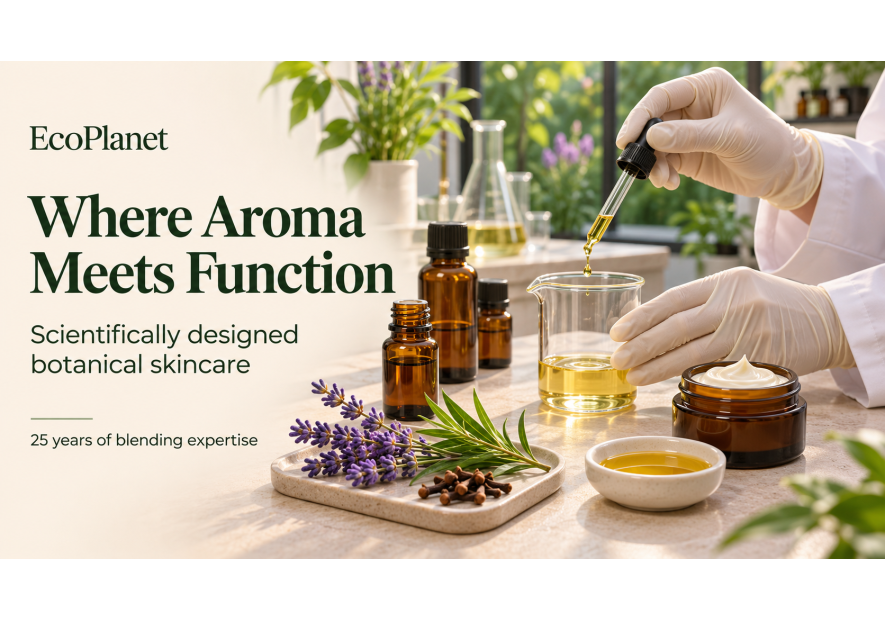
EcoPlanet brings 25 years of blending expertise and research in olfaction science to botanical formulations designed for the treatment, the professional and the client.
A memorable treatment brings several sensations together. The oil glides comfortably beneath the therapist’s hands, the texture suits the technique, and the aroma unfolds gently as the session progresses. Afterwards, the client remembers how their skin felt and the care they received.
Creating that experience begins with formulation.
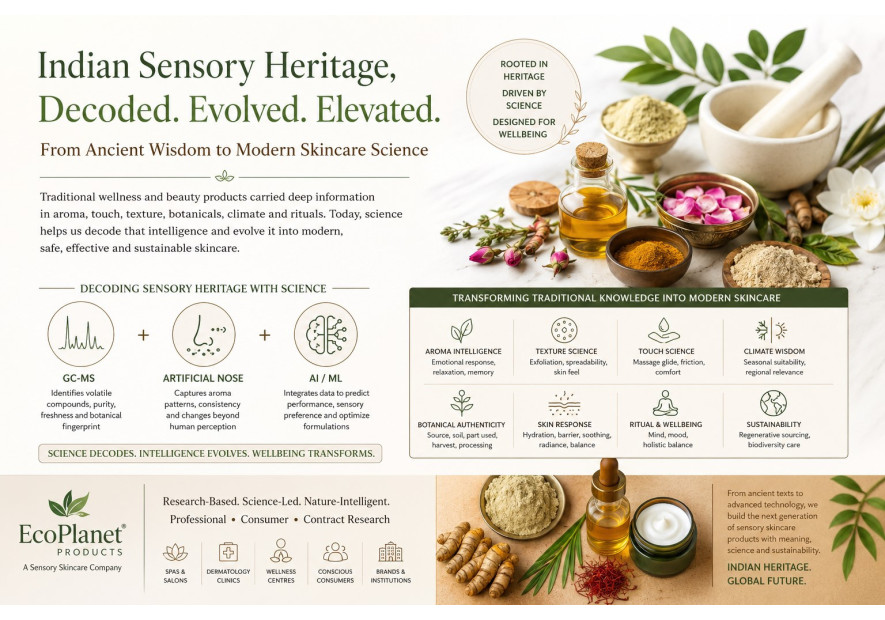
At EcoPlanet, our approach to aromatherapy skincare brings botanical ingredients, natural fragrance and scientific product design into professional care. We develop formulations for spas, salons and dermatologist-guided applications, with attention to the treatment’s purpose and the identity of the business offering it.
Essential oils have a distinctive dual role. They provide natural fragrance, while selected constituents can also contribute functional activity when used in an appropriately designed formulation.
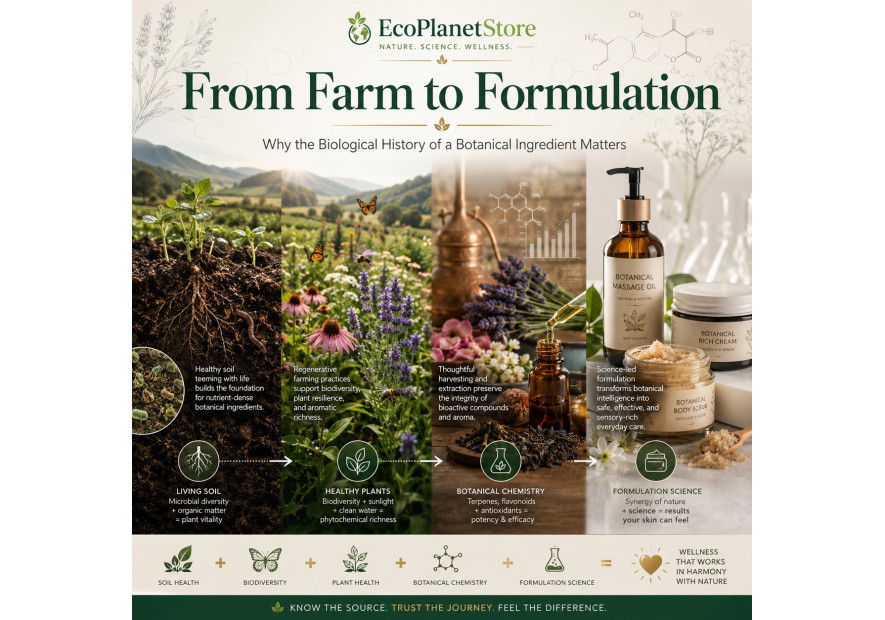
An essential oil is a mixture of volatile compounds. These include terpenes, alcohols, esters and phenolic constituents, whose structures influence both their aromatic character and their interactions with biological systems. Selecting an oil therefore involves understanding its composition, its intended contribution and how it behaves in the finished product.
Tea tree oil offers one example. Laboratory studies have shown that the oil and certain constituents can disrupt bacterial membrane function. Its major constituent terpinen-4-ol has also reduced the production of inflammatory mediators in experiments with human immune cells. Eugenol, a major constituent of clove oil, has demonstrated free-radical-scavenging activity in chemical assays. These findings help explain the functional interest in particular essential oils.
The formulation determines how that potential translates into use. In a small clinical trial, a specific 5% tea tree oil gel improved mild to moderate acne more than placebo over 45 days. The result applies to the preparation studied. Concentration, delivery, stability and skin compatibility all matter when establishing the benefit of a professional product.
This gives the formulator a practical opportunity to select botanical ingredients for complementary sensory and functional purposes, with the claims for each product supported by appropriate evidence.
EcoPlanet’s formulation approach draws on 25 years of essential-oil blending expertise, alongside founder Bimal Das’s research in olfaction science.
That experience brings attention to the details professionals encounter every day. How strongly should the aroma emerge? How will it develop during a long massage? Will it work alongside the other products in a treatment? What texture and finish will suit the therapist’s technique and the client’s preferences?
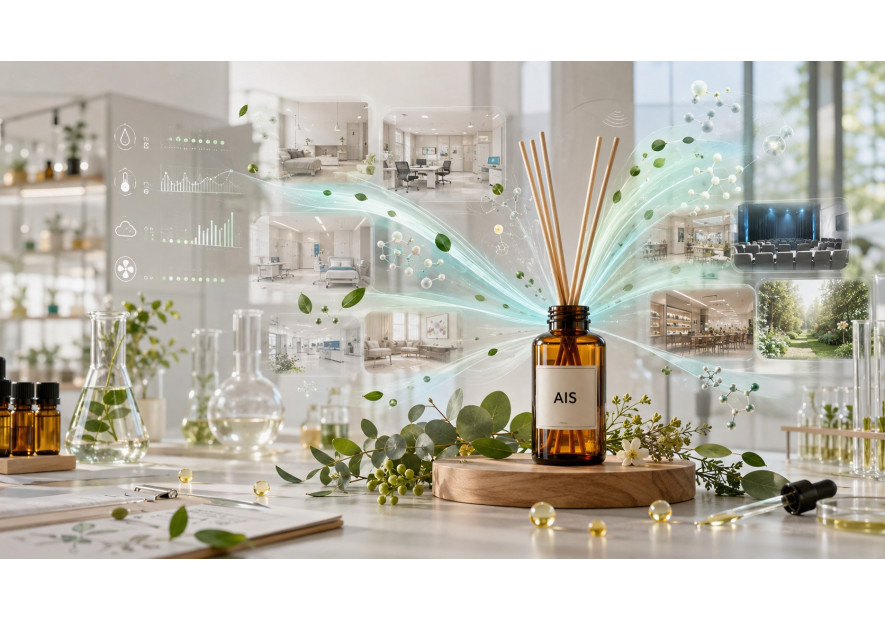
Olfaction science helps inform these decisions. Fragrance molecules evaporate at different rates, and research shows that their release from skin depends on both molecular properties and skin characteristics. For product development, this supports evaluating a blend during application and over time. The aroma experienced during a treatment deserves as much attention as the first impression from an open bottle.
Botanical ingredients also bring natural variation. Two oils sold under the same familiar name may differ because of their species, variety, growing region, season, cultivation or extraction process. Research on lavender has documented differences associated with origin and harvest year, irrigation and drying practices. Even changing the distillation time can alter the proportions of constituents recovered from the same flowers.
A skilled blender works with that diversity within defined quality limits. Analytical tools such as gas chromatography–mass spectrometry, or GC–MS, help characterise composition. Sensory assessment establishes how the blend smells in its intended product. Together with specifications and formulation records, these approaches support a recognisable signature from one batch to the next.
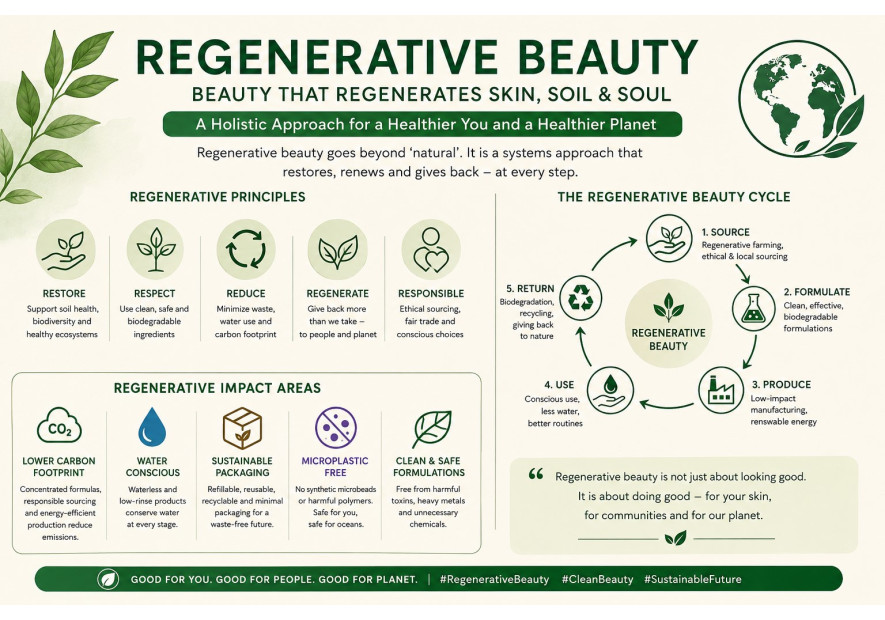
Our clean and green formulation philosophy connects ingredient purpose with care for the client and the resources used to make the product.
A clean composition starts with purposeful selection. Each ingredient should contribute to performance, skin feel, aroma, stability or protection of the formulation. The aim is a balanced product with a considered botanical composition and a fragrance level suited to its use. Effective preservation belongs within this approach, particularly for water-based products, where protection against microbial contamination is essential.
Green formulation also calls for attention to origin and production. Renewable botanical resources, responsible cultivation and harvesting, extraction efficiency and thoughtful packaging are considerations in product development. Life-cycle research shows that fragrance ingredients can have very different environmental footprints depending on their starting materials and production methods. Better sourcing information makes these choices more meaningful.
These principles take shape in products designed for a particular application.
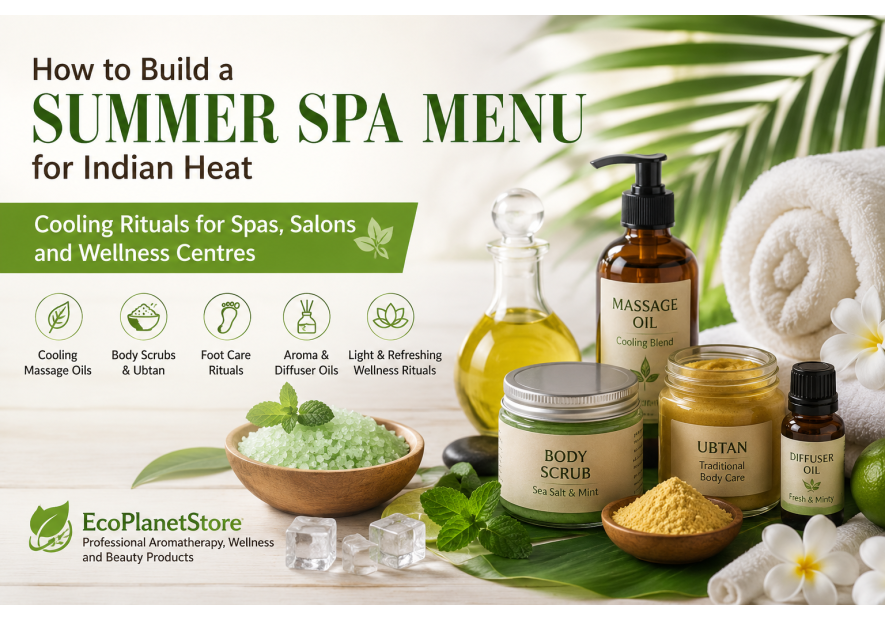
A resort spa may want a massage oil with sustained glide and a soft herbal and woody aroma for an unhurried body ritual. Its accompanying scrub needs an appropriate exfoliating texture, easy removal and an aromatic character that complements the oil. A salon may prefer a foot cream with a lighter finish and a subtle, fresh aroma for the final stage of a pedicure.
The product base, spreadability, fragrance concentration, contact time and rinse-off or leave-on use all influence the design. Carrying a signature aroma across a range involves adapting each formula to its application and assessing the finished result.
In dermatologist-guided care, the clinician’s assessment directs ingredient selection. Fragrance-free options are relevant when fragrance sensitivity or conditions such as atopic dermatitis are present. The American Academy of Dermatology recommends fragrance-free skincare for atopic dermatitis. Individual suitability remains part of personalisation.
EcoPlanet offers personalised formulations around the product, application, treatment and brand positioning of each professional client.
For one business, the brief may be a recognisable aroma for a signature treatment. For another, it may be a particular texture, botanical emphasis or finishing feel. Understanding those requirements allows formulation and blending expertise to support a coherent professional identity.
Carefully selected botanical ingredients and bespoke development can carry a higher cost. Their value becomes tangible when clients enjoy the product, feel their preferences have been understood and receive a consistent experience. That satisfaction may strengthen trust, encourage repeat visits and give clients a reason to remember a treatment by name.
For the professional, a distinctive formulation becomes part of how care is delivered. Its aroma, function and feel can express the character of the business every time it is used.
Discuss your professional skincare range, signature blend or treatment-specific formulation with EcoPlanetStore.com.
