

Skin Exfoliation Science: A Professional Therapist's Guide
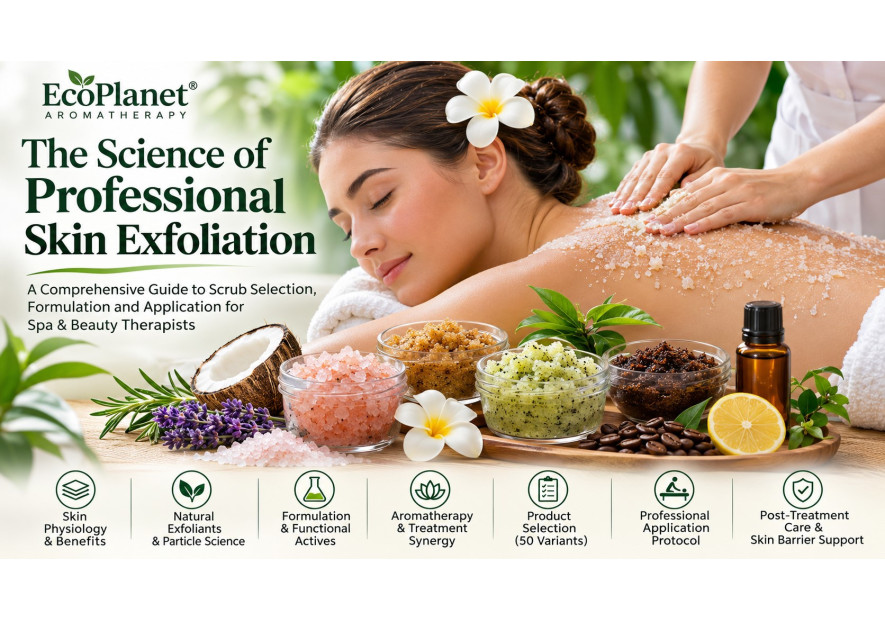
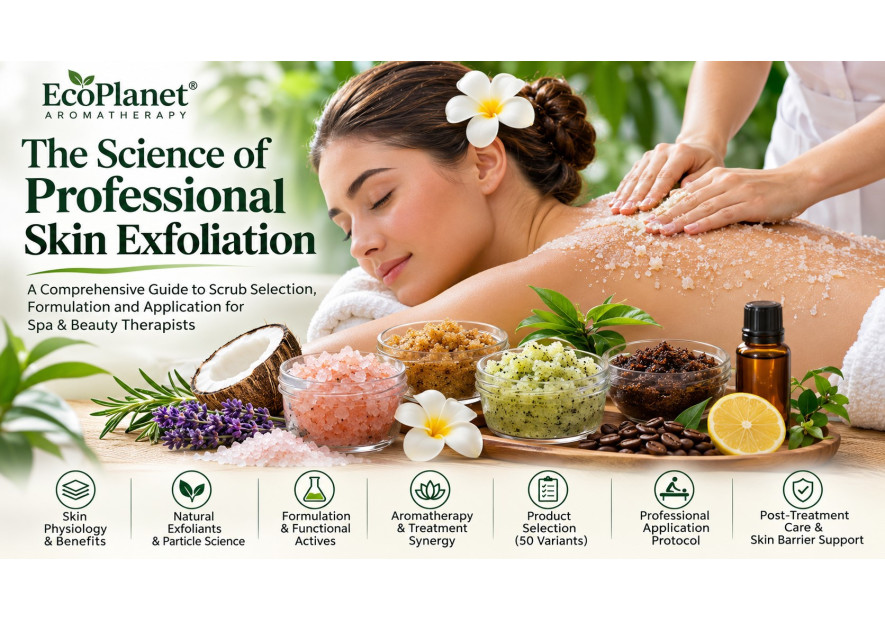
Discover the science of professional skin exfoliation, from skin physiology, particle chemistry and natural exfoliants to functional active ingredients, aromatherapy, formulation technology, product selection, application techniques and post-treatment care.
A comprehensive scientific and practical guide for spa therapists, beauty professionals, salon owners, skincare formulators and wellness academies.
Integrating skin physiology, exfoliant chemistry, botanical ingredients, aromatherapy and professional treatment techniques
By Bimal Das – Founder & Scientist, EcoPlanet®
Exfoliation is an integral part of professional skincare, facial treatments, body polishing, manicures, pedicures and aromatherapy wellness rituals. Yet the selection of an exfoliating product is often influenced more by its fragrance, appearance, texture or marketing description than by its scientific suitability for a particular treatment.
A professional therapist must understand not only how a scrub works but also why a particular exfoliating ingredient, formulation medium and application technique should be selected for a specific skin condition, anatomical area and treatment objective.
A scientifically designed exfoliating treatment brings together several disciplines:
- Skin physiology and dermatology
- Cosmetic chemistry
- Particle science and tribology
- Botanical chemistry
- Aromatherapy and olfaction science
- Professional treatment methodology
- Environmental sustainability
The objective is not simply to remove dead skin cells but to achieve the intended cosmetic and sensory benefits while respecting the biological integrity of the skin.
Contents
- 1. Why Does the Skin Require Exfoliation?
- 2. Understanding the Purpose of a Scrub Treatment
- 3. The Chemistry of Cleansing and Exfoliation
- 4. Classification of Professional Exfoliating Products
- 5. The Science of Mechanical Exfoliation: Tribology
- 6. Scientific Selection of Natural Exfoliating Ingredients
- 7. Synthetic and Plastic Exfoliating Particles
- 8. Comparative Selection Guide for Exfoliating Materials
- 9. Chemical and Enzymatic Exfoliants
- 10. Why the Formulation Base Is as Important as the Exfoliant
- 11. Scrubs Containing Functional and Therapeutic Active Ingredients
- 12. Aromatherapy Scrubs: Integrating Aroma and Functional Ingredients
- 13. Selecting a Scrub According to Skin Type and Condition
- 14. Selecting Scrubs According to Anatomical Area
- 15. A Professional Decision-Making Framework
- 16. Standard Professional Scrub Application Protocol
- 17. Designing Complete Professional Treatment Rituals
- 18. How Frequently Should Exfoliation Be Performed?
- 19. Scientific Evaluation and Quality Control of Scrub Formulations
- 20. Sustainable Exfoliation and Agricultural Resource Utilisation
- 21. EcoPlanet® Professional Aromatherapy Scrubs: The Advantage of Formulation Diversity
- Conclusion: From Product Selection to Scientific Treatment Design
- Scientific References and Further Reading
- About the Author
1. Why Does the Skin Require Exfoliation?
The outermost layer of the epidermis, known as the stratum corneum, consists of flattened, terminally differentiated cells called corneocytes, embedded within an organised lipid matrix containing ceramides, cholesterol and fatty acids.
This structure provides protection against environmental pollutants, chemical exposure, microbial penetration and excessive water loss.
Under normal physiological conditions, superficial corneocytes are continuously shed through a natural process called desquamation.
Environmental exposure, ageing, inadequate hydration and certain skin conditions may influence this process, contributing to visible scaling, roughness and uneven skin texture.
Appropriately selected exfoliation can assist the removal of loosely attached superficial cells. However, healthy skin does not necessarily require regular mechanical exfoliation.
Excessive removal of the stratum corneum can compromise barrier function, increase transepidermal water loss (TEWL) and contribute to irritation and inflammation.
Professional exfoliation should therefore complement the skin's natural renewal processes rather than aggressively accelerate them.
2. Understanding the Purpose of a Scrub Treatment
Before selecting a product, the therapist should establish the primary objective of the treatment.
Not every scrub is designed to perform the same function.
| Treatment objective | Scientific principle |
|---|---|
| Removal of loosely attached dead cells | Controlled mechanical, chemical or enzymatic exfoliation |
| Removal of excess surface sebum | Emulsification, solubilisation and appropriate cleansing |
| Removal of dirt and cosmetic residues | Surfactant action, oil solubilisation and rinsing |
| Improvement of skin smoothness | Reduction of superficial surface irregularities |
| Improvement of dull-looking skin | Controlled exfoliation and skin conditioning |
| Management of superficial dry scaling | Moisturisation and low-intensity exfoliation where appropriate |
| Preparation for massage | Surface cleansing and improvement of tactile smoothness |
| Preparation for body wraps | Controlled removal of superficial debris |
| Hand and foot grooming | Anatomically targeted exfoliation |
| Aromatherapy wellness | Integration of aroma, touch, texture and sensory perception |
| Delivery of cosmetic active ingredients | Appropriate formulation, exposure and skin compatibility |
It is important to distinguish between exfoliation, cleansing, skin conditioning and therapeutic treatment.
A product that effectively removes dead cells may not necessarily remove excess oil. Similarly, a cleansing formulation that removes sebum may have little mechanical exfoliating action.
Professional scrubs may combine several of these functions within a single formulation.
3. The Chemistry of Cleansing and Exfoliation
The skin surface contains a complex mixture of corneocytes, sebum, sweat residues, environmental particles and applied cosmetic products.
Sebum contains predominantly lipid-based substances, including triglycerides, wax esters, squalene and fatty acids.
Water alone is generally insufficient for the effective removal of many oily residues.
Different chemical and physical mechanisms are therefore employed in professional skincare formulations.
Mechanical removal
Solid particles interact with the skin surface during massage-like movements, helping dislodge loosely attached corneocytes and surface debris.
Oil solubilisation
Suitable cosmetic oils can dissolve or loosen certain lipid-based surface residues through interactions between compatible chemical substances.
However, an oil-based scrub without an appropriate emulsification or cleansing mechanism may leave an oily film after rinsing.
Surfactant action
Surfactants contain both water-compatible and oil-compatible molecular regions. They facilitate the dispersion of oily residues into water, allowing them to be removed during rinsing.
The selection and concentration of surfactants influence cleansing efficiency, irritation potential and skin-barrier compatibility.
Chemical exfoliation
Certain chemical ingredients modify the cohesion between superficial epidermal cells, facilitating their removal without requiring substantial mechanical abrasion.
Enzymatic exfoliation
Proteolytic enzymes act on susceptible proteins at the skin surface and can contribute to exfoliation under suitable formulation and application conditions.
The ideal combination of these mechanisms depends on the treatment objective and the physiological condition of the client's skin.
4. Classification of Professional Exfoliating Products
Exfoliating products can be broadly classified according to their principal mechanism of action.
| Exfoliation system | Examples | Principal mechanism |
|---|---|---|
| Mineral-based mechanical | Sea salt, selected mineral particles | Physical abrasion |
| Soluble organic crystals | Sugar | Physical abrasion followed by dissolution |
| Botanical particles | Coffee, green tea, ground leaves | Mechanical exfoliation |
| Lignocellulosic particles | Hazelnut, walnut and apricot stone shells | Sustained mechanical abrasion |
| Starch-based particles | Rice, corn and selected modified starches | Grade-dependent mechanical and absorptive action |
| Cellulose particles | Microcrystalline cellulose, engineered cellulose beads | Controlled mechanical exfoliation |
| Wax-based beads | Jojoba wax and selected vegetable wax particles | Mechanical exfoliation with controlled particle geometry |
| Synthetic polymer particles | Polyethylene and other manufactured polymer beads | Mechanical exfoliation |
| Chemical exfoliants | Glycolic, lactic, salicylic and selected polyhydroxy acids | Modification of superficial cell cohesion |
| Enzymatic exfoliants | Papain, bromelain | Proteolytic action |
| Hybrid formulations | Particles combined with acids, enzymes or other actives | Multiple mechanisms |
The term scrub generally describes a mechanical exfoliating product, although modern formulations may combine mechanical exfoliation with additional chemical or enzymatic functions.
The therapist must understand the primary mechanism before selecting a product or combining it with another treatment.
5. The Science of Mechanical Exfoliation: Tribology
Tribology is the scientific study of friction, lubrication and wear between interacting surfaces.
During a scrub treatment, three components interact:
- The skin surface.
- The exfoliating particles.
- The formulation medium.
The effectiveness and safety of exfoliation depend on the relationship between these components.
| Scientific parameter | Influence on exfoliation |
|---|---|
| Particle size | Influences contact area and local mechanical stress |
| Particle size distribution | Influences uniformity of exfoliation |
| Particle shape | Sharp or angular edges may concentrate mechanical stress |
| Particle hardness | Determines resistance to deformation during application |
| Particle roughness | Influences frictional interaction with the skin |
| Particle friability | Determines whether particles fragment during treatment |
| Water solubility | Determines whether particles progressively dissolve |
| Particle concentration | Influences the number of particle–skin interactions |
| Formulation viscosity | Influences particle mobility and distribution |
| Lubrication | Modifies friction and massage glide |
| Application pressure | Influences mechanical loading on the skin |
| Duration and repetition | Determine cumulative mechanical exposure |
| Skin hydration | Influences flexibility, friction and mechanical response |
A coarse particle is not necessarily more effective, and a fine particle is not necessarily safer.
A hard, angular particle in a poorly lubricating medium may produce greater irritation than a larger but rounded particle in a well-designed formulation.
Consequently, the scientific evaluation of a scrub must consider the complete formulation rather than the exfoliating ingredient alone.
6. Scientific Selection of Natural Exfoliating Ingredients
Natural exfoliating materials differ considerably in their chemical composition, particle morphology, hardness, solubility and interaction with the formulation medium.
6.1 Sea Salt – Mineral-Based Exfoliation
Sea salt consists predominantly of sodium chloride, with varying amounts of other mineral salts.
Salt crystals possess a relatively firm structure and are frequently angular in morphology. They dissolve in water, allowing their mechanical properties to change during wet application.
Salt scrubs are particularly suitable for properly formulated anhydrous oil, butter and wax systems.
Consider selecting salt-based scrubs for:
- Professional body polishing of healthy, intact skin.
- Rough elbows and knees.
- Selected foot-care applications.
- Pre-massage or pre-body-wrap exfoliation where appropriate.
- Mineral-inspired spa rituals.
Salt may cause stinging on damaged, recently shaved or irritated skin. Coarse particles require careful control of application pressure.
Salt's mineral composition should not be interpreted as evidence of systemic mineral absorption or detoxification.
6.2 Sugar – Soluble Organic Exfoliation
Sugar particles consist primarily of sucrose, a water-soluble organic carbohydrate.
During application to suitably moist skin, the particles gradually dissolve, modifying their mechanical action.
Sugar-based formulations can provide a combination of crystalline exfoliation and emollient massage glide when dispersed in appropriate oils and butters.
Consider selecting sugar-based scrubs for:
- General body polishing.
- Selected treatments for normal or dry but intact skin.
- Treatments where progressively dissolving particles are desirable.
- Conditioning body-care rituals.
- Aromatherapy and botanical spa treatments.
Sugar should not automatically be considered gentler than salt. Particle size, crystal geometry, concentration and application technique determine the actual mechanical effect.
6.3 Coffee Powder – Botanical Exfoliation and Sensory Wellness
Ground coffee contains a complex matrix of plant fibres, polysaccharides, lipids and naturally occurring phytochemical constituents, including caffeine and phenolic compounds.
The solid particles remain largely insoluble during treatment, providing more sustained mechanical action than readily dissolving crystals.
Coffee also contributes characteristic aromatic compounds that enrich the sensory experience.
Consider selecting coffee-based scrubs for:
- Botanical body-polishing treatments.
- Coffee-inspired wellness rituals.
- Moderate exfoliation of healthy body skin using appropriately graded particles.
- Selected hand and foot treatments.
- Treatments combining botanical texture and aroma.
The presence of caffeine does not establish slimming, fat reduction or anti-cellulite efficacy in a finished rinse-off product.
Such benefits require specific evidence relating to the complete formulation and its conditions of application.
6.4 Green Tea and Botanical Leaf Powders
Green tea, neem and other botanical leaf powders contain combinations of cellulose, plant fibres, polyphenols, pigments and other naturally occurring compounds.
Their exfoliating characteristics depend on botanical identity, drying, milling and particle grading.
Finely processed leaf powders may contribute gentle mechanical action, colour, botanical identity and sensory appeal.
Consider selecting these formulations for:
- Low-intensity botanical polishing.
- Cream-based exfoliation.
- Herbal spa treatments.
- Selected facial and body applications when specifically formulated and validated for the intended area.
Botanical powders must be evaluated for pesticide residues, microbiological contamination, foreign matter, allergens and compositional variability.
6.5 Hazelnut, Walnut and Apricot Stone Shells
These exfoliants consist predominantly of hard lignocellulosic materials.
Unlike sugar and salt, they remain insoluble during ordinary scrub application and can provide sustained abrasion.
Their mechanical hardness and potentially irregular geometry make particle processing particularly important.
Consider selecting suitably graded shell-based formulations for:
- Targeted exfoliation of rough, intact body skin.
- Selected elbow and knee treatments.
- Controlled body polishing where sustained particle action is required.
Avoid coarse or sharp shell particles on delicate facial skin, sensitive skin and compromised skin barriers.
Microscopic examination is useful because sieving alone does not establish whether particles have sharp edges.
6.6 Starch, Rice and Cereal-Derived Particles
Rice, corn, oats and other cereal-derived exfoliants contain varying proportions of starch, cellulose, proteins, lipids and other plant constituents.
Certain native or modified starch particles can contribute mild exfoliating action, oil absorption and sensory modification.
Their properties vary considerably according to botanical origin and processing.
Consider selecting these formulations for:
- Low-intensity exfoliation.
- Selected cleansing and polishing treatments.
- Cream-based botanical scrubs.
- Facial or delicate-area formulations where suitability has been established.
The presence of starch does not guarantee effective exfoliation. Particle structure, mechanical strength and behaviour during hydration remain important.
Similarly, the recognised skin-conditioning properties of specifically processed colloidal oatmeal should not be attributed automatically to every oat-containing scrub.
6.7 Cellulose and Naturally Derived Wax Beads
Microcrystalline cellulose, engineered cellulose particles and selected jojoba or vegetable wax beads provide opportunities for greater control over particle geometry and size.
Rounded particles may reduce concentrated mechanical stress associated with sharp or angular materials.
Consider selecting these formulations for:
- Controlled, low-intensity exfoliation.
- Professional facial formulations.
- Treatments requiring consistent particle characteristics.
- Delicate areas where the complete product has been validated.
Their environmental compatibility depends on their actual chemical composition and biodegradation characteristics.
7. Synthetic and Plastic Exfoliating Particles
Historically, synthetic polymer microbeads have been used in cosmetic products because manufacturers can control their particle size, shape, hardness and appearance.
From a formulation perspective, such particles may offer consistent mechanical characteristics.
However, conventional non-biodegradable plastic microbeads present significant environmental concerns because particles discharged during rinsing may persist in aquatic environments.
Many jurisdictions have introduced restrictions on intentionally added plastic microbeads in rinse-off cosmetics.
Biodegradable and naturally derived alternatives are increasingly being investigated, including cellulose, starch-based materials, wax particles and agricultural by-products.
The scientific challenge is to achieve predictable exfoliation performance without unnecessary environmental persistence.
Natural origin alone does not establish environmental superiority. Sourcing, processing, biodegradability, water use and overall lifecycle impact must also be considered.
8. Comparative Selection Guide for Exfoliating Materials
| Exfoliating material | Chemical nature | Behaviour during application | Potential professional application |
|---|---|---|---|
| Sea salt | Inorganic mineral crystals | Progressively dissolves in water | Body polishing, elbows, knees, selected foot care |
| Sugar | Organic carbohydrate crystals | Progressively dissolves in water | Conditioning body polishing |
| Coffee | Botanical fibres and phytochemicals | Largely insoluble particles | Sensory body treatments |
| Green tea | Botanical fibres and polyphenols | Grade-dependent abrasion | Mild botanical polishing |
| Leaf powders | Cellulose and phytochemicals | Variable fibrous texture | Selected herbal treatments |
| Apricot stone shell | Lignocellulosic material | Sustained abrasion | Targeted rough-skin polishing |
| Hazelnut shell | Lignocellulosic material | Sustained abrasion | Controlled body polishing |
| Rice bran | Starch, fibre and lipids | Variable fine-particle action | Mild botanical treatments |
| Starch particles | Polysaccharides | Hydration and grade-dependent action | Selected gentle cleansing formulations |
| Cellulose | Polysaccharide | Controlled, grade-dependent abrasion | Face and body formulations |
| Jojoba wax beads | Wax esters | Typically rounded and insoluble | Low-intensity polishing |
| Plastic microbeads | Synthetic polymers | Persistent particles | Environmental concerns favour alternatives |
This table provides a scientific selection framework rather than universal clinical recommendations.
The suitability of any particular exfoliant depends on its specification and the performance of the finished formulation.
9. Chemical and Enzymatic Exfoliants
Mechanical exfoliation is not always the most appropriate method.
Chemical and enzymatic systems may offer alternative approaches, particularly where the desired result cannot be achieved safely through physical abrasion.
Alpha Hydroxy Acids (AHAs)
Glycolic acid, lactic acid and other AHAs can reduce superficial corneocyte cohesion under suitable formulation conditions.
Their effects depend on acid concentration, pH, free-acid availability, exposure duration and application technique.
AHAs may also increase sensitivity to ultraviolet radiation.
Beta Hydroxy Acids (BHAs)
Salicylic acid possesses keratolytic and lipid-associated characteristics that make it useful in appropriately formulated products for selected oily and blemish-prone skin concerns.
However, its suitability depends on formulation, concentration and individual contraindications.
Polyhydroxy Acids (PHAs)
Ingredients such as gluconolactone offer alternative exfoliating systems and may provide moisturising properties in suitable formulations.
Enzymatic Exfoliants
Papain and bromelain are examples of plant-derived proteolytic enzymes that can contribute to superficial exfoliation.
Their activity depends on enzyme concentration, formulation pH, temperature, stability and exposure conditions.
Natural enzymes can also produce irritation or allergic reactions.
Therapists must distinguish between mild cosmetic exfoliating formulations and professional chemical peels.
High-strength chemical peels and procedures intentionally producing controlled skin injury require appropriate clinical oversight and professional qualifications. They should not be treated as ordinary spa scrub applications.
Combining acids, enzymes and physical particles can increase cumulative exfoliating intensity and should only be undertaken using specifically designed and validated treatment protocols.
10. Why the Formulation Base Is as Important as the Exfoliant
The medium in which exfoliating particles are dispersed influences friction, spreadability, cleansing performance, stability and post-treatment skin condition.
Oil-Based and Anhydrous Scrubs
These formulations commonly contain botanical oils, butters, waxes and exfoliating particles without an intentionally added aqueous phase.
Potential advantages include:
- Emollient skin conditioning.
- Lubrication during application.
- Compatibility with soluble salt and sugar particles during storage.
- Rich sensory characteristics.
- Suitability for massage-oriented body-polishing rituals.
The oil and wax system must be designed to provide appropriate particle suspension and consistency.
A poorly formulated oil-based scrub may separate during storage, resulting in uneven distribution of exfoliating particles.
Cream-Based Scrubs
Cream-based scrubs are generally emulsion systems containing aqueous and oil phases.
They provide opportunities to incorporate humectants, emollients, botanical extracts and suitable insoluble exfoliating particles.
Potential advantages include controlled spreadability, adjustable viscosity and convenient application across different treatment formats.
Emulsification, preservation, pH and physical stability require appropriate scientific evaluation.
Gel-Based Scrubs
Gel systems can offer lighter textures and adjustable particle suspension.
They may be appropriate for treatments where a less oily application and refreshing sensory profile are preferred.
Cleansing Scrubs
Surfactant-containing exfoliating products combine surface cleansing with mechanical exfoliation.
They may be useful where removal of excess sebum, dirt or cosmetic residues is an important treatment objective.
However, excessive surfactant activity combined with mechanical abrasion may compromise skin comfort and barrier function.
Selection of the Formulation Medium
| Treatment requirement | Formulation characteristics to consider |
|---|---|
| Conditioning dry, intact body skin | Lubricating oil-rich or emollient cream base |
| Removal of excess surface oil | Mild cleansing or appropriately emulsifying formulation |
| Delicate facial treatment | Specifically validated low-abrasion cream or gel |
| Body polishing before massage | Compatible lubricating and easily removable formulation |
| Foot and hand care | Anatomically appropriate particle size and controlled lubrication |
| Premium sensory spa ritual | Balanced texture, aroma, spreadability and after-feel |
11. Scrubs Containing Functional and Therapeutic Active Ingredients
Modern exfoliating products may contain ingredients selected to provide benefits beyond the removal of superficial corneocytes.
These ingredients may be naturally derived, naturally identical or synthetically manufactured.
Their effectiveness depends on their chemical identity, purity, concentration, stability, bioavailability and conditions of application.
| Functional ingredient | Potential cosmetic role |
|---|---|
| Glycerin | Humectancy and skin hydration |
| Botanical oils and butters | Emollience and skin conditioning |
| Aloe vera | Skin-conditioning and soothing potential |
| Colloidal oatmeal | Skin comfort and barrier-supporting properties |
| Urea | Humectancy and concentration-dependent keratolytic action |
| Niacinamide | Barrier support and improvement of uneven skin appearance |
| Green tea extracts | Antioxidant potential |
| Licorice extracts | Selected skin-conditioning and tone-related applications |
| Caffeine | Functional activity dependent on formulation and exposure |
| Vitamin E | Antioxidant protection and skin-conditioning roles |
| Salicylic acid | Keratolytic activity |
| Selected essential oils | Aromatic and formulation-specific functional properties |
The presence of a biologically active ingredient does not automatically establish therapeutic effectiveness.
For example, an ingredient demonstrating antioxidant or anti-inflammatory activity in laboratory studies may not deliver the same effect during a brief rinse-off treatment.
Professional therapists should differentiate between:
- Established cosmetic benefits.
- Potential biological activity of individual ingredients.
- Scientifically demonstrated effects of the finished formulation.
- Medical claims requiring clinical evidence.
Where the treatment objective involves a diagnosed dermatological disorder, appropriate medical guidance is necessary.
12. Aromatherapy Scrubs: Integrating Aroma and Functional Ingredients
Aromatherapy scrubs introduce an additional dimension to professional exfoliation through the incorporation of carefully selected essential oils and aromatic botanical ingredients.
Essential oils contain complex mixtures of volatile organic compounds, including terpenes, terpenoids, alcohols, aldehydes, esters and phenolic compounds.
Their incorporation into skincare formulations may serve two complementary purposes.
Functional Contribution
Selected essential oil constituents demonstrate antimicrobial, antioxidant or other biological activities under specific experimental conditions.
Their practical cosmetic contribution depends on:
- Botanical species and chemotype.
- Chemical composition.
- Concentration.
- Oxidative stability.
- Formulation compatibility.
- Skin exposure and contact duration.
- Ingredient-specific safety considerations.
These properties should not be translated into disease-treatment claims without appropriate evidence.
Olfactory and Sensory Contribution
During exfoliation, aromatic molecules are released from the formulation and perceived through the olfactory system.
Olfaction is closely associated with emotion, memory, sensory preference and perception of the surrounding environment.
Aromatherapy allows the therapist to integrate aroma with touch, texture, temperature and the overall atmosphere of the treatment.
| Aromatic profile | Examples | Sensory treatment character |
|---|---|---|
| Citrus | Orange, lemon, bergamot | Bright and refreshing |
| Floral | Rose, jasmine, lavender, geranium | Soft and elegant |
| Herbal | Rosemary, lemongrass, selected herbal blends | Fresh and botanical |
| Woody | Sandalwood, cedarwood | Warm and grounding in character |
| Spice | Cardamom and selected spice oils | Warm and distinctive |
| Earthy | Vetiver, patchouli | Deep and earthy |
| Botanical combinations | Coffee, green tea and aromatic plant blends | Distinctive signature experiences |
These sensory characteristics may support a particular treatment atmosphere, but individual responses to aroma vary.
Essential oils must be selected carefully because some constituents can cause irritation, sensitisation or phototoxicity.
Oxidation of aromatic constituents may also increase allergenic potential.
Undiluted essential oils should not be added directly to a finished scrub by therapists without a validated formulation protocol.
The advantage of a scientifically developed aromatherapy scrub is the opportunity to combine controlled exfoliation, skin conditioning, functional botanical ingredients and a distinctive olfactory experience within a single treatment.
13. Selecting a Scrub According to Skin Type and Condition
The therapist's primary responsibility is to assess the condition of the client's skin before selecting an exfoliating formulation.
| Skin type or condition | Recommended scientific approach |
|---|---|
| Normal, healthy skin | Select according to treatment objective and anatomical area |
| Dry but intact skin | Prefer emollient formulations and low mechanical intensity |
| Severely dry or cracked skin | Prioritise moisturisation and barrier recovery; avoid scrubbing |
| Oily skin | Select mild cleansing formulations without excessive lipid removal |
| Acne-prone skin | Avoid aggressive mechanical exfoliation |
| Active inflammatory acne | Avoid scrubbing affected areas |
| Sensitive or reactive skin | Consider avoiding physical exfoliation |
| Mature skin | Reduce mechanical intensity according to skin fragility |
| Pigmentation-prone skin | Minimise irritation and unnecessary inflammation |
| Sunburned skin | Avoid exfoliation |
| Eczema or active dermatitis | Avoid exfoliation of affected areas and seek appropriate medical guidance |
| Recently waxed or shaved skin | Allow adequate recovery |
| Skin recently exposed to peels or laser treatments | Follow the treating clinician's guidance |
Skin colour is not itself a measure of abrasiveness tolerance. However, individuals susceptible to post-inflammatory hyperpigmentation require particular care because mechanical irritation may contribute to subsequent pigmentation.
14. Selecting Scrubs According to Anatomical Area
The physiological and mechanical characteristics of the skin vary across the body.
A product designed for heel exfoliation may be completely unsuitable for the face.
Facial Treatments
Facial skin requires careful assessment of sensitivity, sebaceous activity and existing skincare routines.
Select only facially appropriate formulations with controlled particle characteristics.
Avoid the eyelids, immediate eye area, active acne lesions and inflamed regions.
Neck and Décolletage
These areas may require lower mechanical intensity than other body regions.
Avoid excessive friction and repeated abrasion.
Full-Body Polishing
Salt, sugar and appropriately formulated botanical scrubs may be selected according to skin condition and treatment requirements.
Adjust application pressure and intensity across different body regions.
Elbows and Knees
Roughness in these areas may justify targeted exfoliation, provided the skin is intact and non-inflamed.
Do not assume that pigmentation can be removed by stronger scrubbing.
Manicure and Hand Care
Hand exfoliation should consider frequent exposure to soaps, detergents, sunlight and occupational irritants.
Low-to-moderate intensity formulations combined with skin conditioning may be appropriate.
Avoid damaged cuticles, wounds and irritated skin.
Pedicure and Foot Care
The soles and heels possess a thicker stratum corneum than many other body regions.
Selected exfoliating formulations can assist superficial smoothing of intact rough skin.
However, cracked heels, infections, ulcers, impaired circulation and reduced sensation require special consideration.
Clients with diabetes-related foot complications, neuropathy or poor circulation should receive appropriate medical or podiatric guidance rather than aggressive salon exfoliation.
Anatomical Selection Matrix
| Treatment area | Suggested exfoliation intensity |
|---|---|
| Face | Very low to low |
| Neck and décolletage | Low |
| Arms and legs | Low to moderate |
| Back | Low to moderate, according to skin condition |
| Hands | Low to moderate |
| Elbows and knees | Controlled, targeted intensity |
| Dorsal surface of feet | Low to moderate |
| Soles and intact heels | Targeted exfoliation according to condition |
These intensity categories are relative professional guidelines, not standardised clinical measurements.
15. A Professional Decision-Making Framework
Before selecting a scrub, the therapist should answer six fundamental questions.
| Decision | Question |
|---|---|
| Purpose | What result is the client seeking? |
| Skin condition | Is the skin healthy, dry, oily, sensitive or compromised? |
| Anatomical area | Where will the product be applied? |
| Exfoliation mechanism | Should the treatment use mechanical, chemical or enzymatic action? |
| Formulation medium | Is an oil, cream, gel or cleansing base appropriate? |
| Aromatherapy profile | Which aroma and botanical character suit the client and treatment concept? |
The product should be selected only after these questions have been considered.
Aroma should complement the appropriate scientific selection of the formulation rather than determine it independently.
16. Standard Professional Scrub Application Protocol
Step 1: Client Consultation
Establish the client's expectations, skin history, known allergies, recent cosmetic treatments and current use of exfoliating products or medications affecting skin sensitivity.
Obtain consent for the proposed treatment.
Step 2: Skin Assessment
Examine the treatment area for dryness, roughness, sensitivity, inflammation, wounds, infection or other contraindications.
Where necessary, modify, postpone or decline the exfoliating treatment.
Step 3: Product Selection
Select the appropriate exfoliating material, formulation medium, mechanical intensity, functional ingredients and aromatic profile.
Review the manufacturer's application instructions.
Step 4: Hygienic Product Dispensing
Use a clean spatula to remove the required quantity from the professional container.
Avoid introducing water, used applicators or contaminated hands into bulk product containers.
Do not return unused dispensed product to the original pack.
Step 5: Skin Preparation
Cleanse the treatment area where necessary.
Prepare the skin according to the product's instructions, taking into consideration whether the formulation is intended for dry, damp or wet application.
Step 6: Controlled Application
Distribute the product uniformly across the treatment area.
Use gentle, controlled movements and adjust pressure according to anatomical region, skin condition and particle characteristics.
Do not use redness or discomfort as indicators of successful exfoliation.
Step 7: Monitor Skin Response
Observe the client's comfort and visible skin response throughout the application.
Discontinue immediately if significant stinging, burning, discomfort or irritation occurs.
Step 8: Product Removal
Remove the formulation thoroughly according to its instructions.
Lukewarm water and suitable soft towels may be used where appropriate.
Avoid excessive rubbing during removal.
Step 9: Post-Exfoliation Conditioning
Select a compatible moisturising cream, lotion or botanical oil to support skin comfort.
Complementary massage or body wraps may be incorporated if the skin remains comfortable and the combined treatment protocol is appropriate.
Step 10: Aftercare
Advise the client to avoid unnecessary additional exfoliation until the skin has recovered.
Recommend appropriate moisturisation and sun protection for exposed skin, particularly following acid-containing treatments.
Record the product used, treatment area, client response and any adverse reactions.
17. Designing Complete Professional Treatment Rituals
Exfoliation can be incorporated into broader spa and salon services rather than offered as an isolated procedure.
| Professional treatment | Suggested treatment sequence |
|---|---|
| Conditioning body ritual | Gentle body scrub → removal → emollient massage → moisturisation |
| Botanical body polishing | Botanical scrub → removal → compatible body-care formulation |
| Aromatherapy relaxation ritual | Suitable gentle scrub → aromatic massage → relaxation |
| Mineral-inspired spa ritual | Salt scrub → removal → compatible mineral or clay wrap where appropriate → moisturisation |
| Bridal body care | Controlled body polishing → skin conditioning |
| Manicure | Hand cleansing → gentle hand exfoliation → hand massage cream |
| Pedicure | Foot assessment and cleansing → targeted exfoliation of intact skin → foot cream |
| Seasonal winter body care | Low-intensity exfoliation where appropriate → rich moisturising treatment |
| Facial ritual | Facial cleansing → specifically selected facial exfoliant → conditioning treatment → sun protection where applicable |
The combined effects of all stages must be considered.
Steam, heat, exfoliation, massage, acids and body wraps should not be combined indiscriminately, as their cumulative effects may increase irritation.
18. How Frequently Should Exfoliation Be Performed?
There is no universal exfoliation frequency suitable for every client.
Frequency depends on:
- Skin condition and recovery.
- Exfoliating mechanism.
- Mechanical intensity.
- Formulation characteristics.
- Anatomical area.
- Environmental conditions.
- Concurrent skincare products.
- Recent professional treatments.
More intensive exfoliation generally requires greater recovery time.
Dry or sensitive skin may benefit more from moisturisation than from frequent exfoliation.
Professional therapists should individualise treatment intervals according to the client's response rather than promote unnecessary exfoliation through rigid schedules.
19. Scientific Evaluation and Quality Control of Scrub Formulations
The scientific development of a professional scrub involves more than assessing appearance, fragrance and viscosity.
Relevant evaluation parameters include:
| Evaluation parameter | Scientific purpose |
|---|---|
| Particle size distribution | Assessment of consistency and variability |
| Optical or electron microscopy | Evaluation of particle shape and surface morphology |
| Particle hardness and friability | Understanding abrasion and fragmentation |
| Rheological analysis | Assessment of flow, viscosity and suspension |
| Tribological analysis | Evaluation of friction and lubrication |
| Solubility testing | Understanding particle behaviour during application |
| pH, where applicable | Evaluation of formulation compatibility |
| Water activity | Assessment of microbial growth potential |
| Oxidative stability | Evaluation of botanical oil and aromatic ingredient stability |
| Microbiological quality | Assessment of microbial contamination |
| Preservative efficacy | Evaluation of preservation where applicable |
| Transepidermal water loss | Assessment of skin barrier response |
| Corneometry | Measurement of skin hydration |
| Sebum measurement | Evaluation of surface oil removal |
| Skin surface imaging | Evaluation of changes in skin texture |
| Corneocyte removal assessment | Measurement of exfoliation performance |
| Irritation assessment | Evaluation of skin tolerance |
| Sensory evaluation | Assessment of texture, aroma, application and after-feel |
Exfoliation efficiency, cleansing effectiveness, skin hydration and barrier compatibility should be evaluated as distinct performance characteristics.
These are recommended scientific evaluation approaches. Claims relating to a particular commercial product must be supported by its own relevant formulation and performance data.
20. Sustainable Exfoliation and Agricultural Resource Utilisation
Professional exfoliating products provide opportunities to integrate cosmetic science with sustainable agricultural resource utilisation.
Coffee-processing residues, fruit stones, nut shells, rice bran, cereal-processing residues and selected botanical fibres may serve as valuable sources of cosmetic exfoliating materials.
Their utilisation can contribute to circular production systems by converting suitable agricultural by-products into value-added ingredients.
However, responsible utilisation requires:
- Scientific characterisation.
- Controlled processing.
- Particle standardisation.
- Contaminant screening.
- Microbiological safety.
- Traceable sourcing.
- Evaluation of biodegradability and environmental impact.
Sustainable formulation should not simply replace synthetic ingredients with natural alternatives.
It should integrate ingredient sourcing, formulation performance, product safety, packaging, water consumption and the environmental fate of materials after use.
21. EcoPlanet® Professional Aromatherapy Scrubs: The Advantage of Formulation Diversity
Every professional establishment has its own treatment philosophy, clientele, environmental conditions and sensory identity.
A single scrub formulation cannot adequately address every professional treatment requirement.
EcoPlanet® therefore offers an extensive range of professional exfoliating formulations across different bases, botanical combinations and aromatic profiles.
Our collections include:
- 50 variants of professional salt-based scrubs.
- 50 variants of professional sugar-based scrubs.
- Cream-based exfoliating formulations.
- Botanical, herbal, floral, fruit, mineral and aromatherapy-inspired treatment concepts.
The salt and sugar scrub formulations utilise an oil, butter and beeswax suspension system designed to maintain an even distribution of exfoliating particles and facilitate convenient professional application.
This approach addresses a practical challenge associated with simple mixtures of oil and crystalline exfoliants, which may separate during storage.
The diversity of aromatic and botanical variants allows therapists to develop distinctive treatment menus inspired by coffee, green tea, rose, jasmine, lavender, sandalwood, papaya, pomegranate, cucumber, seaweed, citrus, chocolate, herbs and other natural sensory concepts.
However, the selection process should begin with the appropriate exfoliation mechanism and formulation base.
The therapist can then select the botanical and aromatic variant according to the client's preferences and the desired treatment experience.
Different aromatic variants within a common scrub base should not automatically be assumed to have different levels of abrasiveness or clinically demonstrated therapeutic effects.
Explore the Professional Collections
EcoPlanet® Professional Salt Scrubs – 50 Variants
EcoPlanet® Professional Sugar Scrubs – 50 Variants
EcoPlanet® Complete Professional Aromatherapy Collection
Conclusion: From Product Selection to Scientific Treatment Design
Professional exfoliation should be understood as a scientifically designed skincare process rather than simply the application of an abrasive cosmetic product.
The successful therapist integrates knowledge of:
- Skin physiology.
- Exfoliating particle characteristics.
- Cleansing and formulation chemistry.
- Botanical and functional ingredients.
- Aromatherapy and olfactory perception.
- Anatomical differences.
- Application methodology.
- Client-specific requirements.
- Environmental responsibility.
At EcoPlanet®, our formulation philosophy brings together over 25 years of experience in botanical ingredients, essential oil blending, cosmetic formulation and professional wellness products.
We believe the future of professional skincare lies in the integration of:
Skin Science + Cosmetic Chemistry + Botanical Science + Olfaction Science + Professional Treatment Expertise + Environmental Responsibility
The true measure of a professional exfoliating treatment is not how aggressively it removes skin cells, but how appropriately it achieves the intended cosmetic and sensory benefits while respecting skin integrity.
Scientifically developed. Professionally formulated. Inspired by nature.
Scientific References and Further Reading
- The Skin's Barrier – Experimental Dermatology
- Skin 101: Understanding the Fundamentals of Skin Barrier Physiology
- Cleansing Formulations That Respect Skin Barrier Integrity
- Influence of Exfoliating Facial Cleanser on the Bio-Tribological Properties of Human Skin – Wear
- Research on Waterless Cosmetics in the Form of Scrub Bars Based on Natural Exfoliants – Applied Sciences, 2024
- Advanced Characterization of Sustainable Exfoliating Particles from Food Waste for Facial Scrub Formulations and Their In Vivo Evaluation
- Composition of Scrub-Type Cosmetics from the Perspective of Product Ecology and Microplastic Content
- In Vivo Cleansing Efficacy of Biodegradable Exfoliating Beads Assessed by Skin Bioengineering Techniques
- From Agro-Industrial Residues to Dermocosmetic Exfoliants: A Narrative Review of Sustainable Ingredients
- How to Safely Exfoliate at Home – American Academy of Dermatology
- Alpha Hydroxy Acids – US Food and Drug Administration
- Beta Hydroxy Acids – US Food and Drug Administration
- Urea in Dermatology: A Review of Its Emollient, Moisturizing and Keratolytic Properties
- Essential Oils and Their Single Compounds in Cosmetics – A Critical Review
- Essential Oils as Natural Sources of Fragrance Compounds for Cosmetics and Cosmeceuticals
- The Role of Odor-Evoked Memory in Psychological and Physiological Health
- Diabetes and Foot Problems – National Institute of Diabetes and Digestive and Kidney Diseases
About the Author
Bimal Das is a scientist, entrepreneur and founder of EcoPlanet®, with expertise in aromatherapy, essential oil blending, cosmetic formulation, olfaction science, regenerative agriculture and sustainability.
With an academic background in Chemistry, Food Technology at CSIR-CFTRI, Mysuru, and Sustainability Engineering at IISc, Bengaluru, his work explores the relationship between natural ingredients, scientific formulation, human sensory perception and environmental wellbeing.
This article is intended as an educational resource for professional beauty and wellness therapists. It does not replace dermatological diagnosis, medical advice or product-specific safety and application instructions.
